Application evaluation
Site monitoring
2,000 m from a fixed post, at ≈ 10 g and ≈ 1.2 W.
The valid measurement rate drops from 98% to 80% past 400 m.
A fixed observation post is the one application where the module’s own environmental rating is least useful and the enclosure design matters most. Nothing moves, the geometry is known, and the thing that decides whether the installation works in year three is whether water got in.
Start there, because LR2000E2 is honest about it in a way that is easy to miss: its protection rating field reads “on request”, not IP67. Several modules in this catalog do publish a number — LR1000E2, LR1200E2, LR1500E2 and SPD1200N0/N2 all state IP67 inside the lens cavity, and LRF3000A1 states IP67 — but LR2000E2 does not, and neither do the H-series modules, whose spec tables carry no protection row at all. Do not carry a sibling’s rating across. Get the actual figure in writing for the model you are specifying before you design a weather enclosure around an assumption, and remember that a lens-cavity rating was never a rating for your finished housing in the first place.
What LR2000E2 does give you is reach on a small power budget: 4–2,000 m, ±1 m to 400 m and d·0.4% from 400 to 2,000 m, 2–10 Hz adaptive, 905 ± 5 nm, < 6 mrad divergence, ≈ 10 g in a 25.65 × 13.05 × 24.6 mm square body, 3.3–5 V at about 1.2 W with < 400 mA inrush and ≤ 200 ms start-up, −20 to +60 °C operating. PMMA optics, 9.2 × 14.5 mm receiver aperture, MTBF ≥ 1,500 h.
The number to design a monitoring loop around is not the range, though. It is the valid measurement rate: ≥ 98% below 400 m, ≥ 80% from 400 to 2,000 m, with a false-alarm rate ≤ 1% throughout. At the top of the envelope, one reading in five may not come back. For a monitoring installation sampling a slope, a stockpile or a structure, that is not a fault — it is the specification, and your logic has to distinguish “no valid return” from “distance unchanged”. Design the gap-filling and the alarm thresholds around the 80% figure, not the 98% one.
Reflectivity is the other thing the number on the box never tells you. A range figure is quoted against a bright reference target; weathered concrete, dark aggregate, wet asphalt and vegetation behave far closer to a 10% surface, and the two ends of a range specification do not scale together. Size the installation against the worst surface actually in your scene, measured at the angle you will actually mount at — a beam arriving at a steep angle on an uneven surface scatters more and returns less.
Laser class reads IEC Class 1, declared in the model manual; the assessment of the installed system is separate.
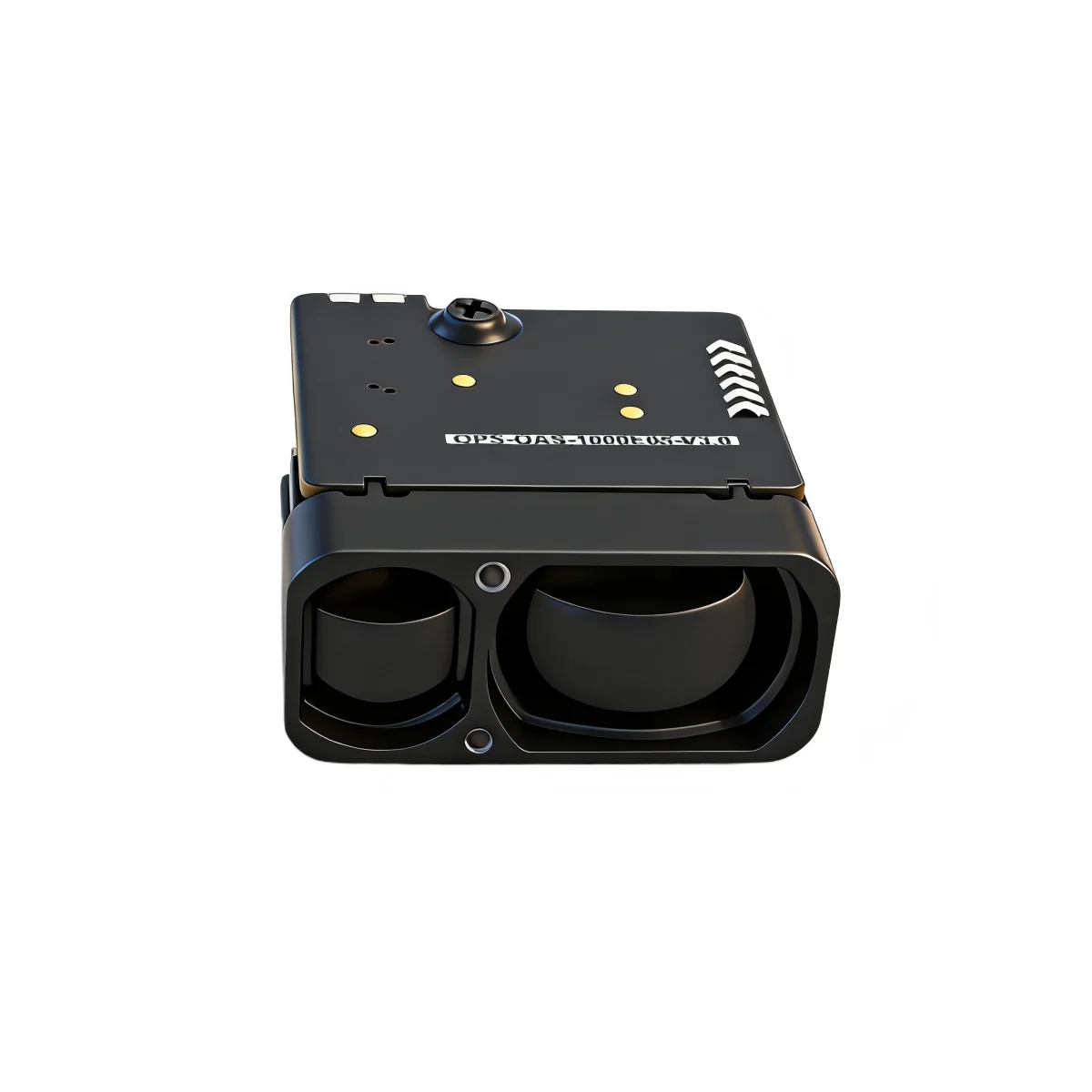
LR2000E2’s protection rating is “on request” — so plan the enclosure.
Bring the measurement conditions and integration constraints into the same review.
01The scene, not the distance+
Tell us the target, the background behind it, its reflectivity and the sun angle at the worst hour of the day. A bright background behind a dark target is a harder problem than distance alone.
02The enclosure is yours, and so is its rating+
LR2000E2 publishes no protection rating; the modules that do publish IP67 publish it for the lens cavity only. Whatever the module states, the rating of the finished installation is established by your housing, your window and your gland — not by ours.
03Bus reality check+
Every module in this catalog speaks UART-TTL or I²C. None offers RS-485, RS-232 or CAN natively, and monitoring installations usually wire into one of those. Put a UART-to-RS-485 converter in the bill of materials from the start rather than discovering the gap during commissioning.
From the module to the host.
LR E series · UART-TTL
UART-TTL, 115200 bps, 3.3–5 V, < 400 mA inrush.
Check the supply, signal levels, pinout and output format for the exact model and revision. Request any missing detail before connecting your hardware.
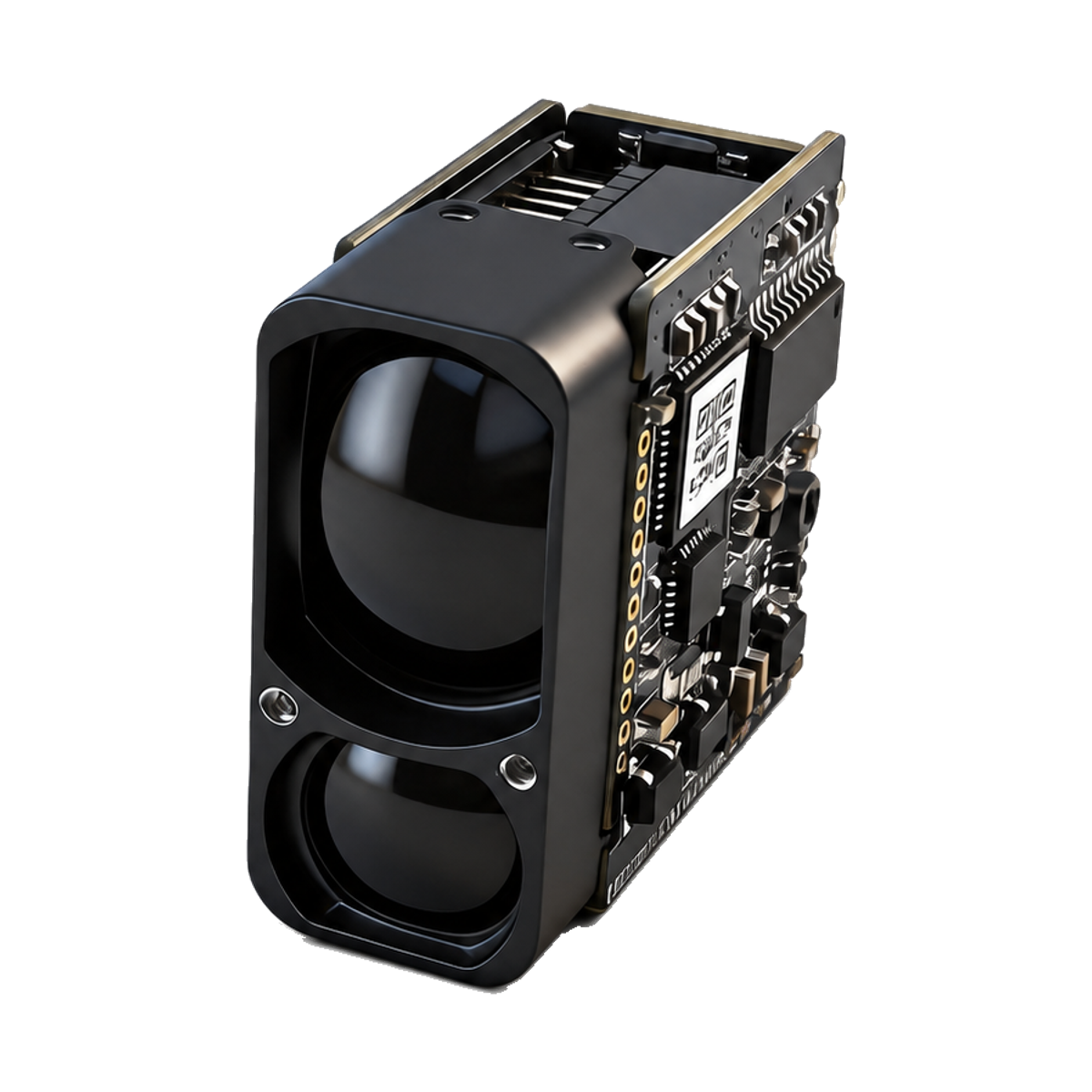 LR2000E2
Related application pages
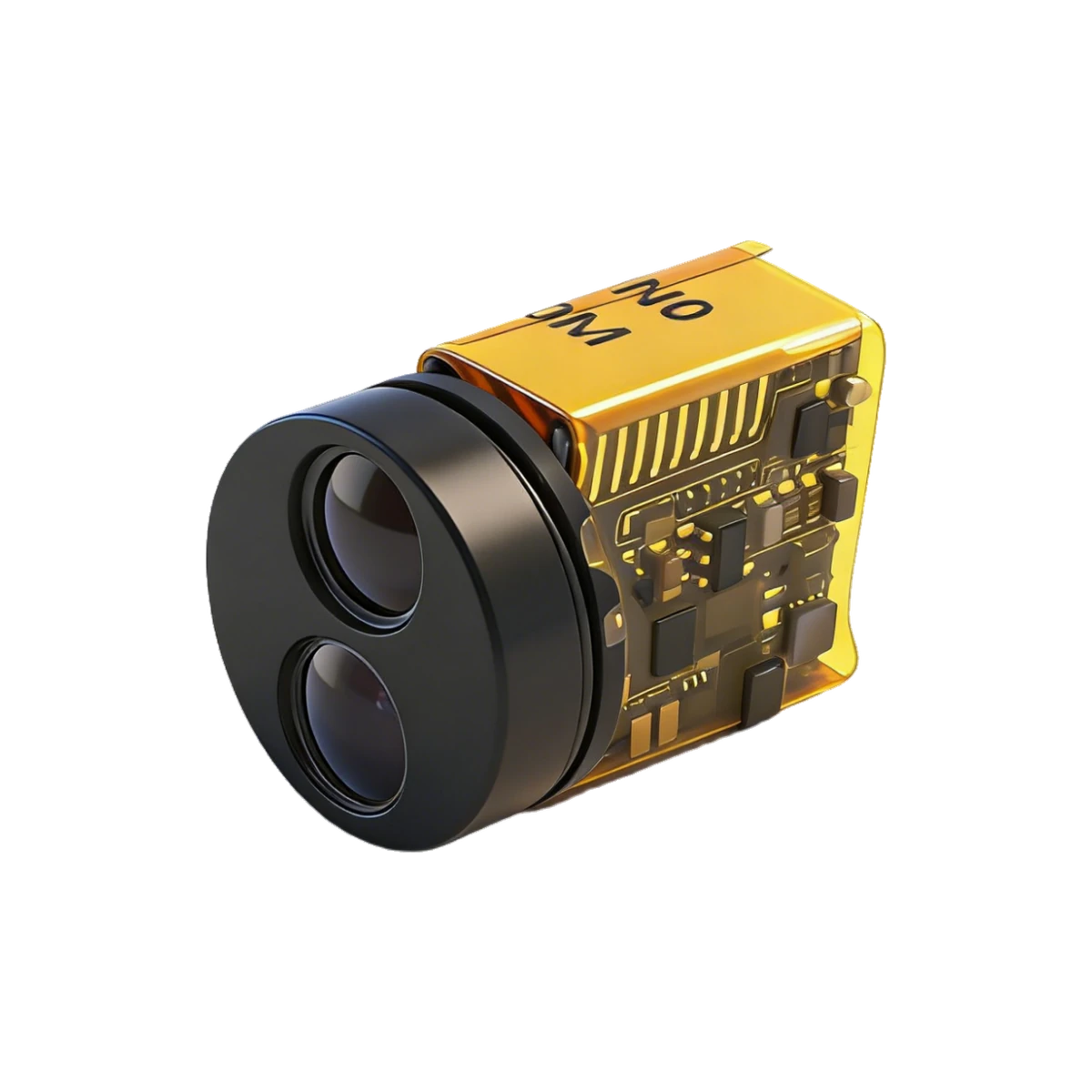
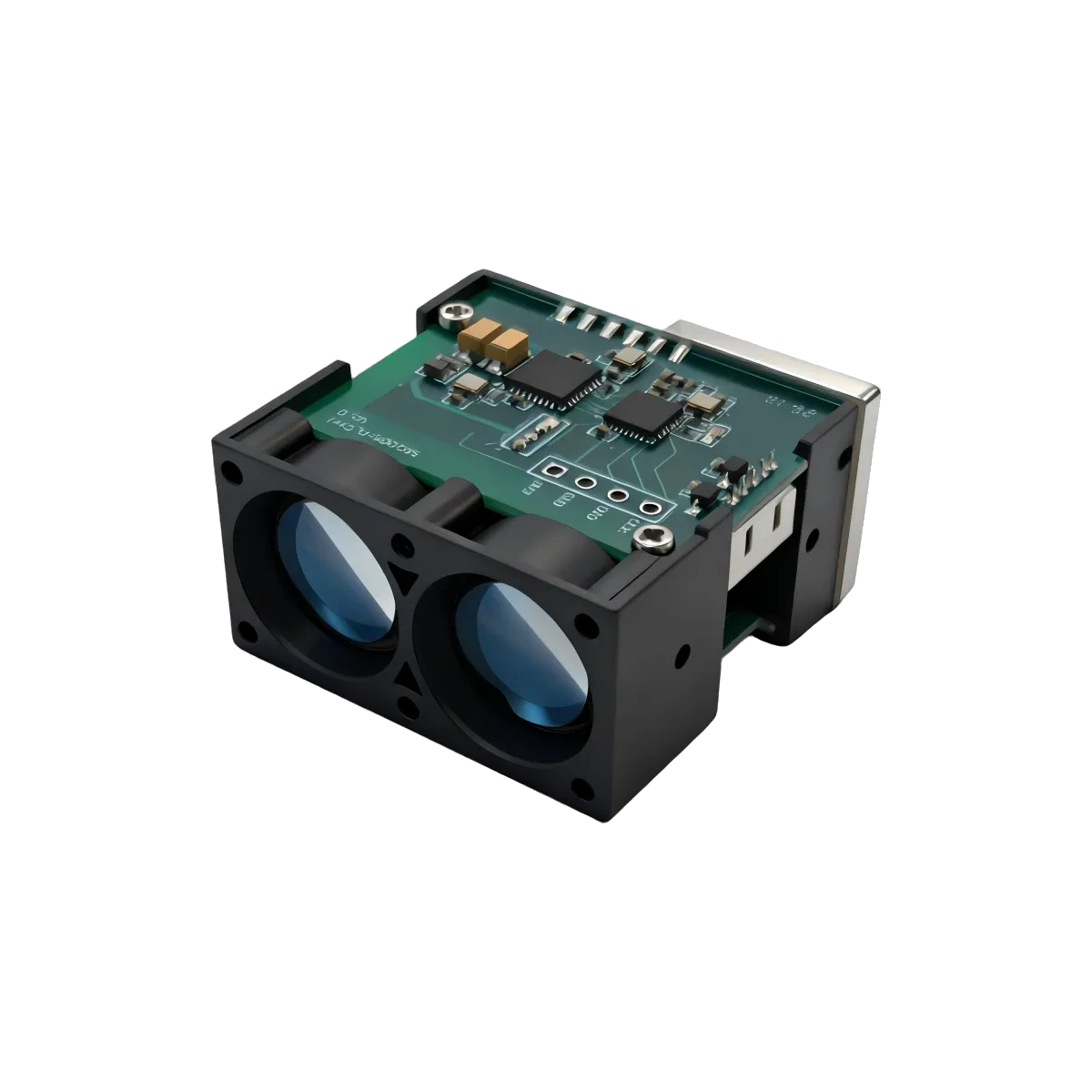
Share the model and distance for a technical review.
Share the distance, object surface, interface, space constraints and quantity. Include a model number if you already have one in mind.
The six-point integration checklist · How the 90% and 10% reflectivity columns diverge · Field measurement: when the post needs more than 2,000 m
Confirm the current datasheet and laser safety documentation for the specific model and revision. Final suitability depends on your complete device and its operating conditions.