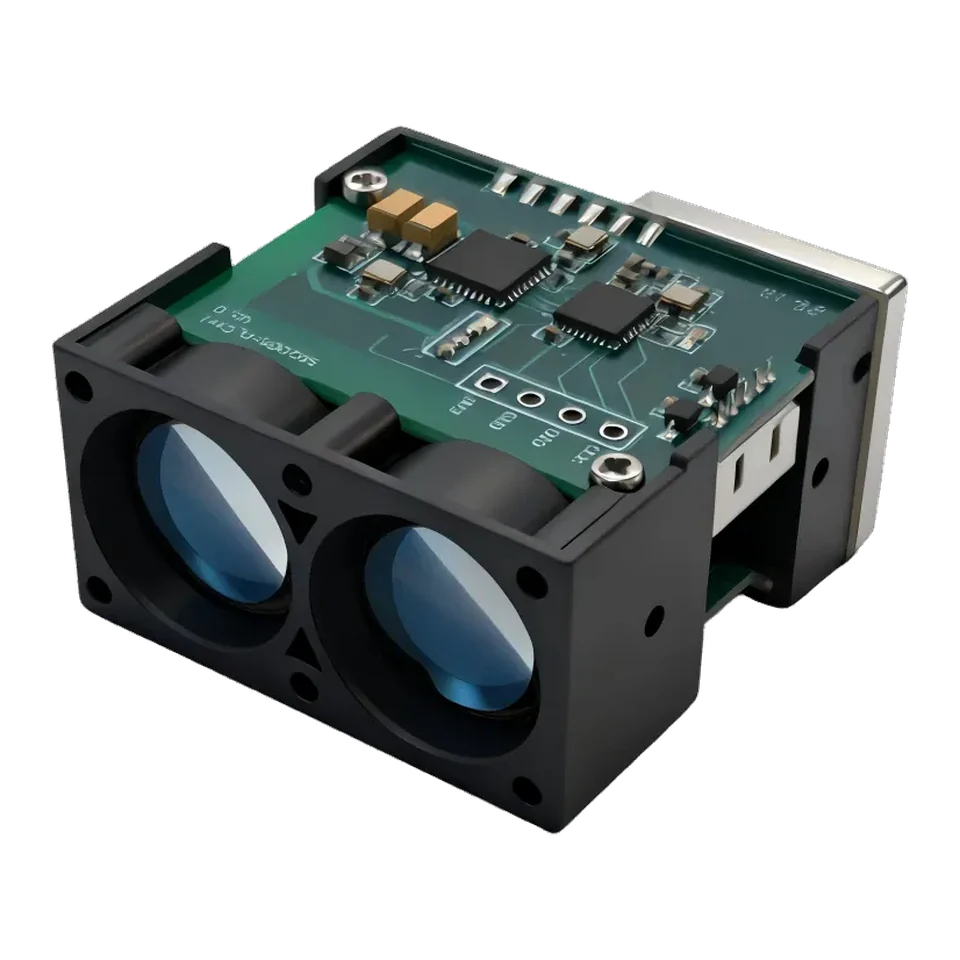
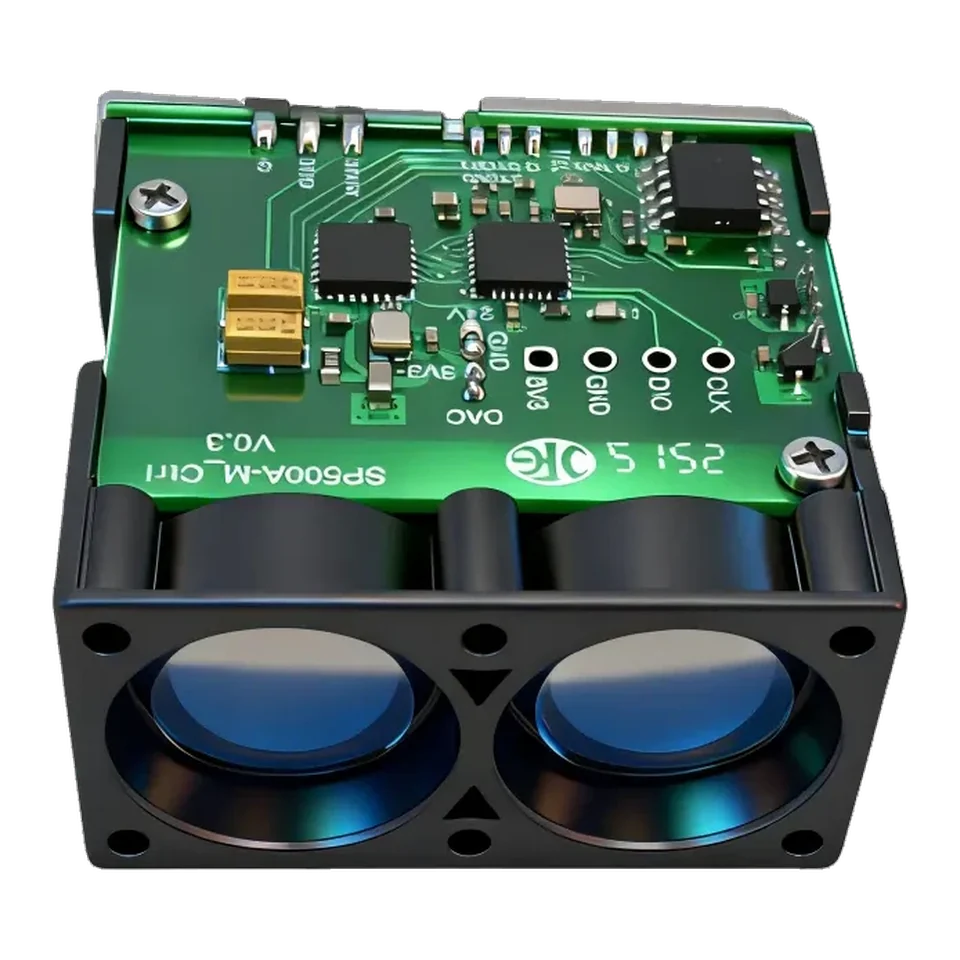
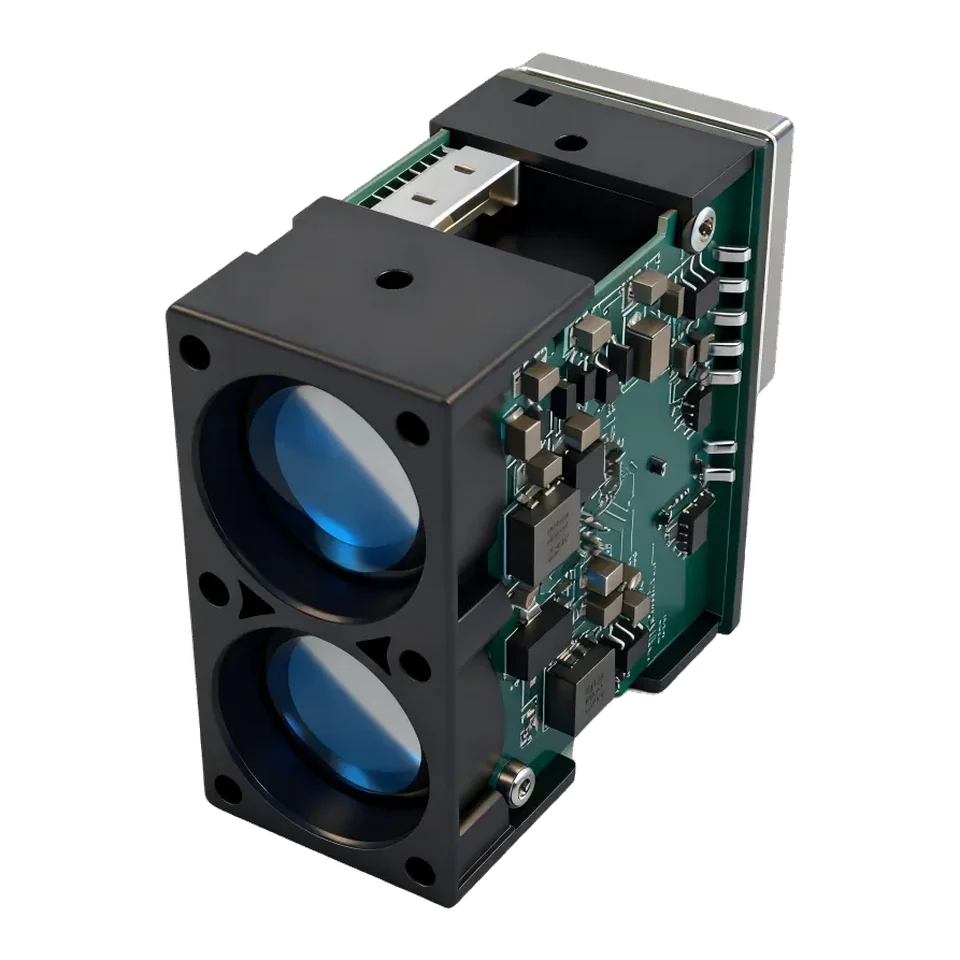
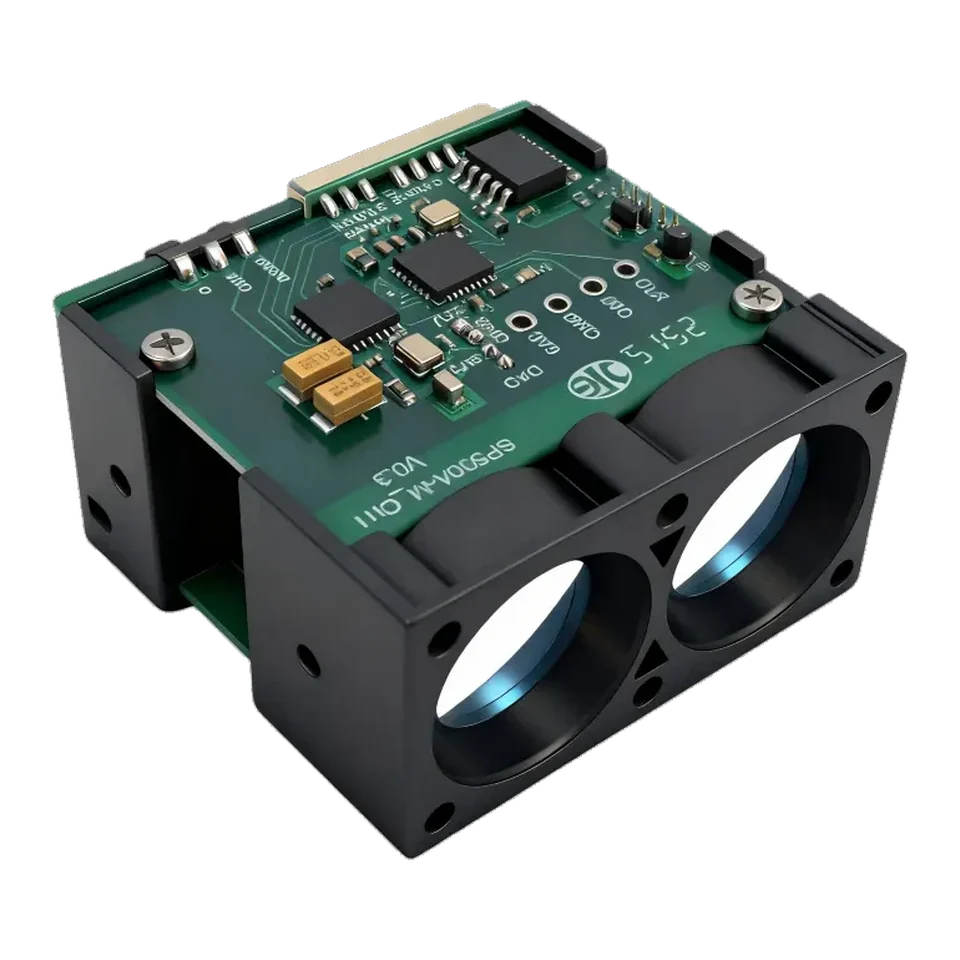
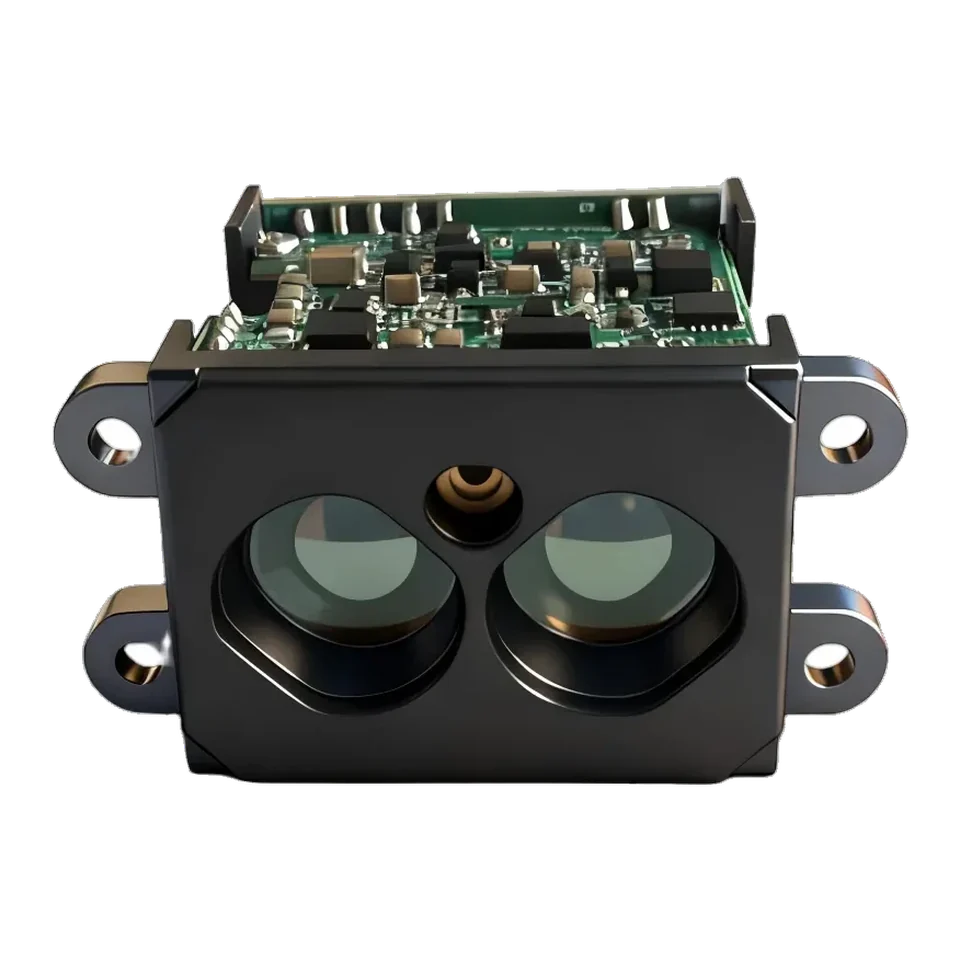
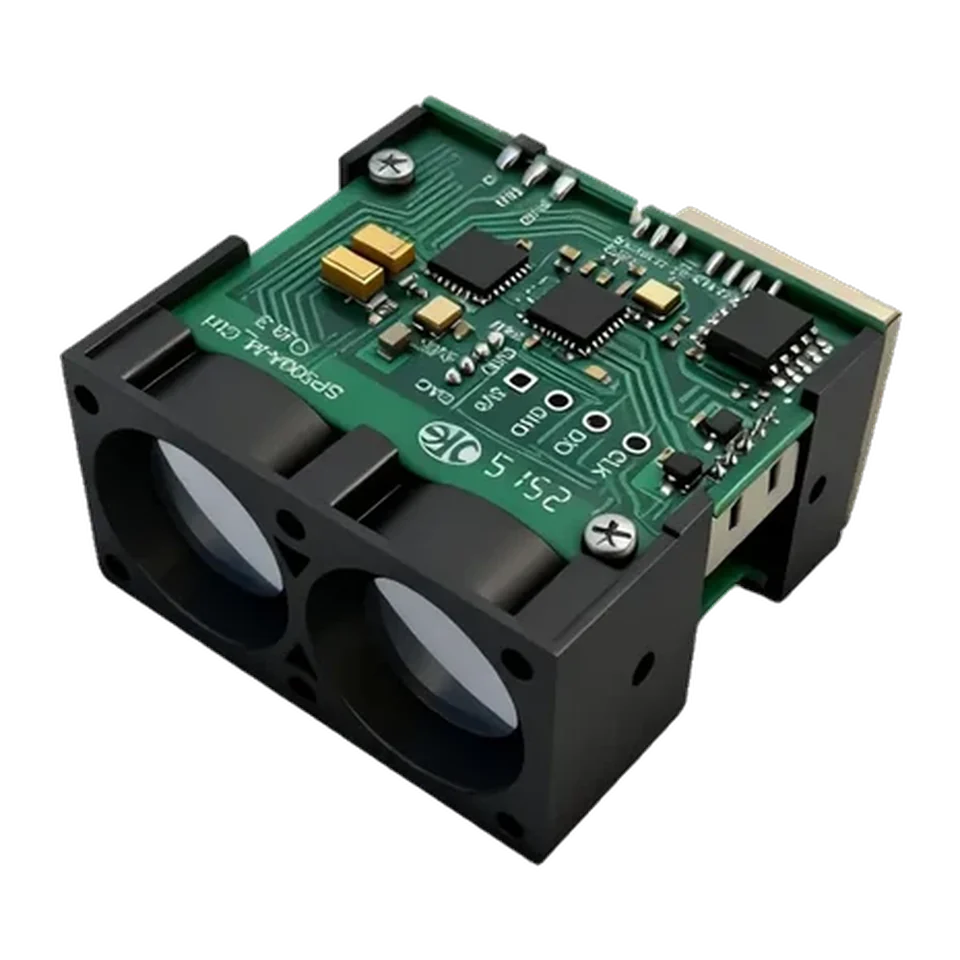
What the H series is
The H series is the six-model industrial line, from 50 m to 1,500 m. LRF100H through LRF1500H share one outline (33 × 34 × 18 mm, 20 ± 2 g), a 9 to 36 V DC input and a Class 1 statement in each manual, so you can step up the range without redrawing the mount. LRF50H is the smaller exception at 38 × 20 × 30 mm and 15 ± 2 g.
What sets it apart
Every H model gives two range figures, one for a 90% reflective target and one for a 10% reflective target. Read the second column if your surface is dark. Update rate is the other split: LRF50H, LRF100H and LRF200H run 20 Hz to 10 kHz with 1 kHz as the default, while LRF300H, LRF600H and LRF1500H select 1 kHz or 50 Hz automatically from echo strength. The manuals list 100 kLux ambient light immunity for LRF100H, LRF200H, LRF300H, LRF600H and LRF1500H.
One quirk matters in software: the H series reports distance in centimetres, as a 2-byte little-endian value after a 5C header, with baud 460800 (adjustable). VB-series modules use millimetres. Reusing a VB parser on an H unit gives results ten times too small. LRF1500H has a 3-byte distance field and its manual records two values for out-of-range output and checksum, so see its datasheet before writing a decoder.
| Model | Range, 90% target | Range, 10% target | Update rate |
|---|
| LRF50H | 0.05–50 m | 0.05–15 m | 20 Hz–10 kHz, default 1 kHz |
| LRF100H | 0.05–100 m | 0.05–30 m | 20 Hz–10 kHz, default 1 kHz |
| LRF200H | 0.05–200 m | 0.05–70 m | 20 Hz–10 kHz, default 1 kHz |
| LRF300H | 0.05–300 m | 0.05–100 m | 1 kHz or 50 Hz, automatic |
| LRF600H | 0.05–600 m | 0.05–200 m | 1 kHz or 50 Hz, automatic |
| LRF1500H | 0.05–1,500 m | 0.05–300 m | 1 kHz or 50 Hz, automatic |
Who it is for
- Machine builders working on cranes, conveyors, carriages and tunnel monitoring, where a 9 to 36 V supply is already present.
- Integrators who need a high sampling rate for a moving carriage or vehicle.
- Monitoring projects such as wind power, landslide and level monitoring, which the LRF100H record names as use cases.
LRF50H adds a switchable 650 nm red aiming light, listed as Class 2, which helps with alignment on site.
Where to go next
For industrial uses start at industrial sensing. For the two upper-range models on aircraft, read the UAV gimbal laser rangefinder module page. The update-rate article explains how update rate behaves on a moving platform, and the laser rangefinder module hub compares all families.