What the A series is
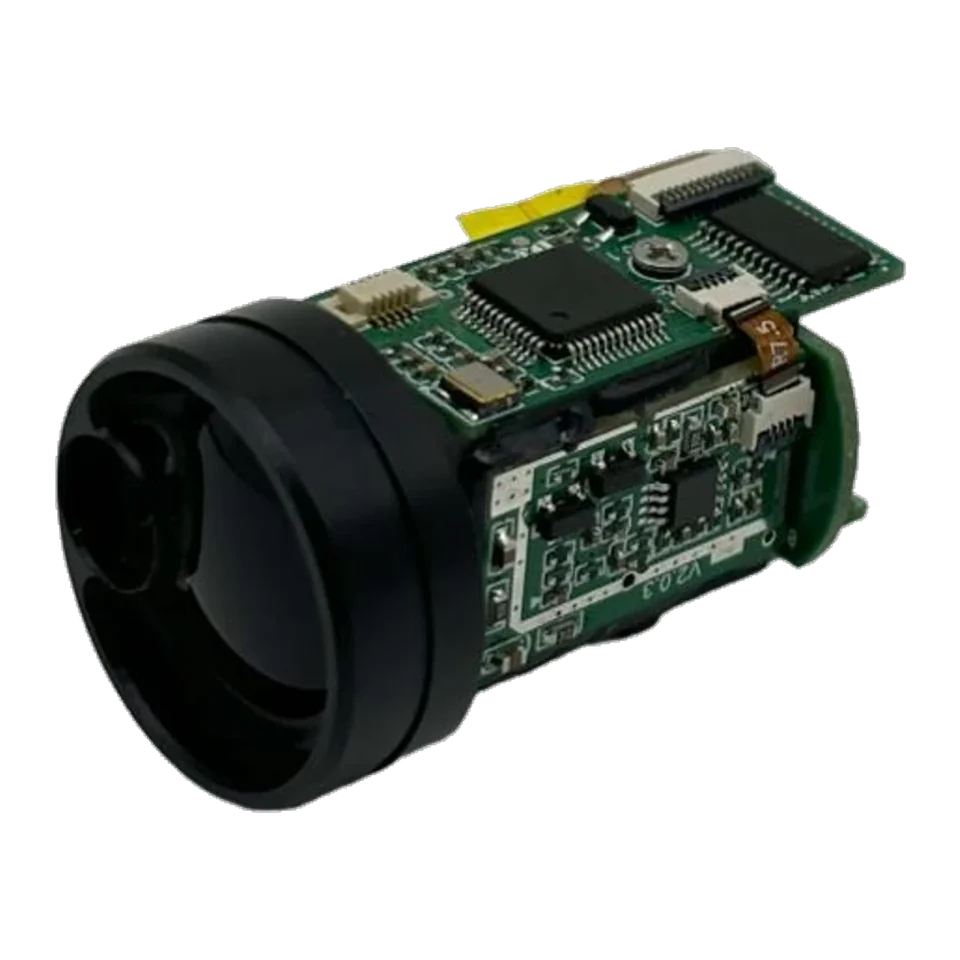
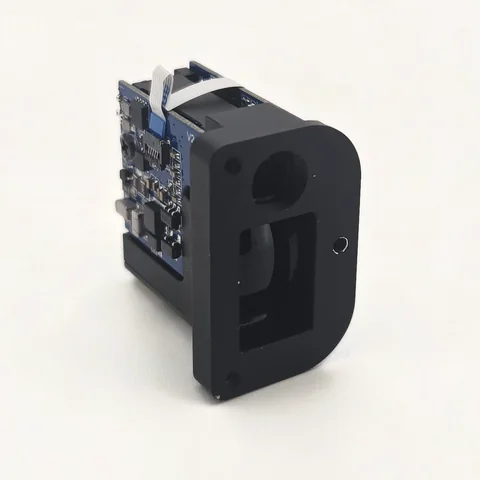
The A series groups two compact 905 nm modules that sit at different points on the range scale: LRF1200A1 for work out to 1,200 m, and LRF3000A1, with a datasheet maximum of at least 3,000 m. Both report over a TTL-level UART, so a microcontroller serial port can read them directly once you have confirmed the logic level of the delivered unit.
How the two models differ
LRF1200A1 has a source-table building-target range of 5 to 1,200 m and is positioned for compact civilian integration evaluation. Its records carry open source questions: the manual and the factory pack give different housing sizes, different accuracy statements and different supply ranges. Those fields are shown as "see datasheet (two values in manual)" below, and the delivered version is confirmed in writing before you design a board around it.
LRF3000A1 is the flagship. Its table states at least 3,000 m at 70% reflectivity on a building target in clear weather with visibility of at least 4 km. Accuracy is 0.7 m up to 100 m and 0.7 m plus 0.3% of distance beyond it. It measures 13.5 × 25.1 × 27.8 mm, weighs 12 ± 0.5 g and is rated IP67. Its normal mode adapts between 3 and 10 Hz, and a long-range mode between 1 and 10 Hz.
| Model | Range | Interface | Size and supply |
|---|
| LRF1200A1 | 5–1,200 m (building target) | UART, TTL | see datasheet (two values in manual) |
| LRF3000A1 | at least 3,000 m (70%, clear weather) | UART, TTL 3.3 V; 115200 bps default or 9600 bps | 13.5 × 25.1 × 27.8 mm; DC 3.3–5 V |
Who it is for
- Teams building observation or surveying instruments that need a range figure in the high hundreds or thousands of metres in a palm-sized housing.
- Payload designers who need a light module with a low-power standby state: LRF3000A1 lists standby at 1 mW or less with enable high.
- Buyers who want a documented false alarm rate (1% or less) and valid-measurement rate (98% or more) rather than a range figure alone.
Where to go next
The LRF3000A1 deep dive walks through the long-range table line by line. If the module will sit on a gimbal, read the UAV gimbal laser rangefinder module guide; for a wider comparison with the other families, use the laser rangefinder module hub or the model directory. To ask for a sample or a quotation, use the sample request form.