Integration
Use the integration path that matches your host:
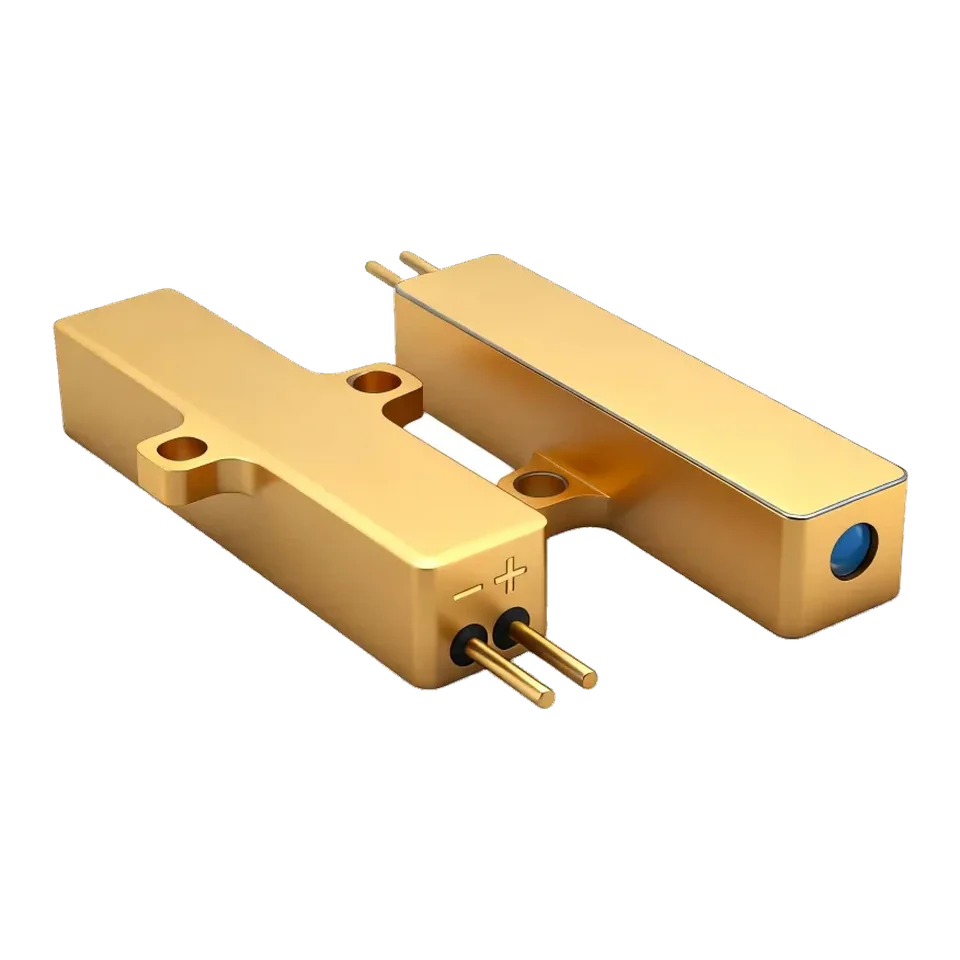
Erbium-glass laser sources
The ERDI ER400 is a 1535 nm pulsed laser source with 12 g weight, from $300 per piece with free worldwide shipping. Specs verified:
1535 nm Erbium-Glass Laser Source.
Built into your next design.
1 pc $300501+ pcs from $200Published unit prices, shipping included · Quantity options
MOQ 1 pc · Free worldwide shipping · Reply within 24 h
Standard warranty: one year
Lead time stated on your PI before payment
Shipped by DHL to customers in the US, India and Ukraine
Published price · shipping included worldwide · pay by card or PayPal, or by bank transfer. Volume price applies automatically.
Added to cart. Go to checkout →
Card or PayPal · Bank transfer · Free worldwide shipping
| Quantity | Unit price | Subtotal at first quantity |
|---|---|---|
| 1–10 | $300 | $300 |
| 11–50 | $280 | $3,080 |
| 51–200 | $260 | $13,260 |
| 201–500 | $240 | $48,240 |
| 501+ | $200 | $100,200 |
The details
Read every value with its conditions. View the model documents for integration.
| Parameter | Specification & conditions |
|---|---|
| Model | ER400 |
| Laser Wavelength | 1535nm |
| Parameter | Specification & conditions |
|---|---|
| Laser classification | On request |
| Parameter | Specification & conditions |
|---|---|
| Pulse energy | 400 µJ |
| Laser Pulse width | 6 ns (FWHM) |
| Drive pulse width | <2.4 ms |
| Pulse repetition rate | 10 Hz |
| Pulse stability | 10% |
| Raw Beam Diameter | 0.3 mm |
| Beam divergence angle | 7 mrad |
| Beam Mode | TEM00 |
| Operating temperature | −40 °C ~ +65 °C |
| Storage temperature | −55 °C to +85 °C |
| Dimension (mm) | 35 × 8 × 6.8 mm |
| Weight | 12 g |
| Voltage | 2 V |
| Electric current | 15 A |
| Shock | 1500 G, 0.5 ms |
| Vibration | 20~2000 Hz/20 G |
| Lifetime | >1million shots |
Use the current document revision for design review and confirm the ordered connector and mechanical configuration before release.
ER400 1535 nm Erbium-Glass Laser Source
ER400 is a laser rangefinder module for UAV payloads. Confirm target conditions, configuration and the current datasheet before integration.
ER400 delivers 400 µJ at 10 Hz from a 35 × 8 × 6.8 mm, 12 g erbium-glass package, for 1535 nm designs that have outgrown a 300 µJ source.
WhatsApp about ER400Published unit prices apply only to the stated quantity band. Configuration, qualification, tax and Incoterm details are confirmed in the quotation.
Integration library
Drawings, test conditions and application notes. Open the part you need.
ER400 and ER500 use the same 35 mm package. ER500 adds ≥500 µJ and a 1–10 Hz rate. ER400 starts at $200 at 501+ pieces; ER500 starts at $240 at 501+ pieces. See each model’s Volume Pricing for quantity bands.
Coming from ER300, expect 10 mm more length and 3.5 g more mass. Going up to ER800 means a 40 × 8 × 7.5 mm, 18 g body and a step change in price.
Pick ER400 when 10 Hz operation and a moderate energy increase cover your target set.
Figures are reproduced from the ER400 datasheet. Read each value together with the test condition printed beside it.
ER400 is part of the 1535 nm erbium-glass pulsed laser family. Its current PDF lists pulse energy 400 µJ and optical pulse width 6 ns (FWHM). Repetition-rate status is shown separately in the table. These are the source's distinct specifications; none establishes the distance or accuracy of a finished instrument.
| Parameter | Current PDF value |
|---|---|
| Model | ER400 |
| Laser Wavelength | 1535nm |
| Laser classification | On request |
| Pulse energy | 400 µJ |
| Laser Pulse width | 6 ns (FWHM) |
| Drive pulse width | <2.4 ms |
| Pulse repetition rate | 10 Hz |
| Pulse stability | 10% |
| Raw Beam Diameter | 0.3 mm |
| Beam divergence angle | 7 mrad |
| Beam Mode | TEM00 |
| Operating temperature | -40 ℃ ~ +65 ℃ |
| Storage temperature | -55 °C to +85 °C |
| Dimension (mm) | 35×8×6.8 mm |
| Weight | 12 g |
| Voltage | 2 V |
| Electric current | 15 A |
| Shock | 1500 G, 0.5 ms |
| Vibration | 20~2000 Hz/20 G |
| Lifetime | >1million shots |
This page follows the current download: 400 µJ, 10 Hz and 7 mrad without added inequality or range qualifiers; FWHM 6 ns, storage −55 to +85°C and drive pulse <2.4 ms. Older webpage entries are superseded.
The recorded raw beam diameter is 0.3 mm and divergence is 7 mrad. The current specification table does not state the divergence's full-angle/half-angle convention or the beam-width measurement method. Those definitions remain unspecified until a beam report confirms them. The beam-mode entry does not, by itself, supply a measured M² value.
Values above were checked against the current model PDF, including its inequality signs and stated measurement qualifiers. Source entries of “Class 1” require the corresponding classification report; shock, vibration and lifetime entries likewise need their stated test conditions. Missing tolerances and statistics are not reconstructed from another model or a paper.
Same package. ER500 gives at least 500 µJ and adjustable 1–10 Hz; ER400 gives 400 µJ at 10 Hz and costs slightly less.
Not without layout changes: ER400 is 35 mm long against 25 mm for ER300.
Ask us for the batch test data at the temperatures that matter to you; the datasheet gives the operating range of −40 °C to +65 °C.
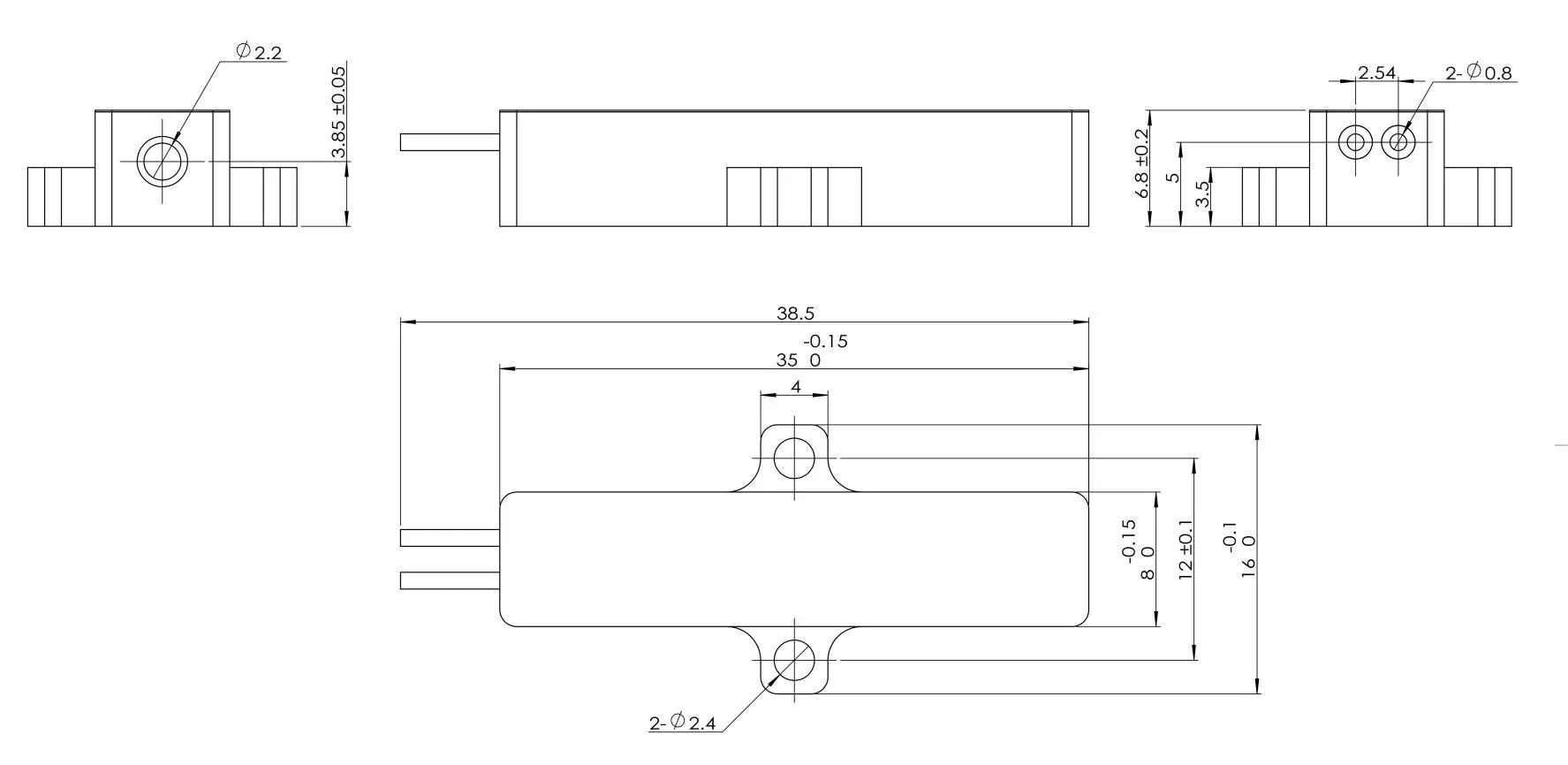
Taken from the ER400 outline drawing and user manual. Check hole positions against the drawing or the STEP file before machining a bracket.
Two Φ2.4 mm mounting holes in the side lugs, 12 mm apart centre to centre. Screw size is not stated on the drawing.
Request the ER400 STEP model for your bracket design.
Engineering Q&A
Wiring, protocol or integration question? Ask in the ERDI engineering community.
Use the integration path that matches your host:
Inspect the model in your browser, or ask for the STEP file for your design review.
Request 3D STEP model — reply within 24 hTechnical inquiry
Share the target, range, interface and expected quantity. Your selected model stays attached to the inquiry.