Application evaluation
Handheld instruments
1,200 m from a Ø23 mm barrel at 18 g.
Two fields on this datasheet are blank, and both matter outdoors.
A handheld distance instrument is a mechanical problem before it is an optical one. The barrel, the eyepiece or display, the battery, the trigger geometry and the way a hand actually holds the device all get designed first; the ranging module has to fit what is left and survive being dropped on a site.
LRF1200A1 is the catalog’s answer for that form factor: a Ø23 mm cylinder whose stated length differs between sources (40 mm or 48 mm; confirm the supplied drawing), 18 g, measuring ≥ 5 m to 1,200 m against a building target, ±1 m from 5 to 100 m and ±(1 + L × 0.4%) beyond 100 m, at 1–3 Hz over UART at TTL 3.3 V, with a display resolution of 0.1 m.
Three of those numbers constrain the industrial design more than the range does.
The 5 m minimum. This module does not read a near wall. If your instrument has to measure across a room as well as across a field, LRF1200A1 is the wrong single sensor: LRF50VB starts at 0.05 m, weighs 1.3 g in an 18.7 × 11.8 × 13.3 mm body and runs 100 Hz on 3.3–5 V, and a two-sensor instrument is a smaller compromise than a blind zone the user discovers in the first week.
The 3.3 V ± 0.1 V rail. Most of this catalog accepts 3.3–5 V. LRF1200A1 does not: it wants 3.3 V within 100 mV, which means a regulator rather than a battery rail straight through, and it means checking the droop at the bottom of your discharge curve rather than at the nominal cell voltage.
1–3 Hz. This is a deliberate-measurement instrument, not a tracking one. The user presses, waits, reads. Design the interaction — and the display hold behavior — around one to three readings a second, and do not promise a live-tracking mode the module was not built to support.
Read the accuracy line as the formula it is, not as “±1 m”. At 100 m the budget is ±1 m; at 1,200 m it is ±(1 + 1,200 × 0.4%) ≈ ±5.8 m. Compute it at the longest distance your instrument will be sold against, then decide whether the 0.1 m display resolution you are showing the user is honest at that end of the scale. Resolution is not accuracy, and an instrument that displays two decimal places at 1,000 m is making a promise the physics does not keep.
Now the two blanks, which for a handheld product are the ones to close before tooling. LRF1200A1’s protection rating reads “on request” and its operating temperature reads “on request” — not IP67, not a temperature band. Every instrument in this category lives outdoors. Get both in writing for your configuration before you commit to a housing seal or publish an operating range on your own box.
LRF1200A1 source materials include a Class 1 declaration and an unresolved Class 1/Class 3R panel discrepancy. Confirm the applicable documentation and label for the supplied unit before making a laser-class claim. No third-party IEC 60825-1 report exists for any model here. If your instrument is going into a market that asks for a classification report, ask us early.
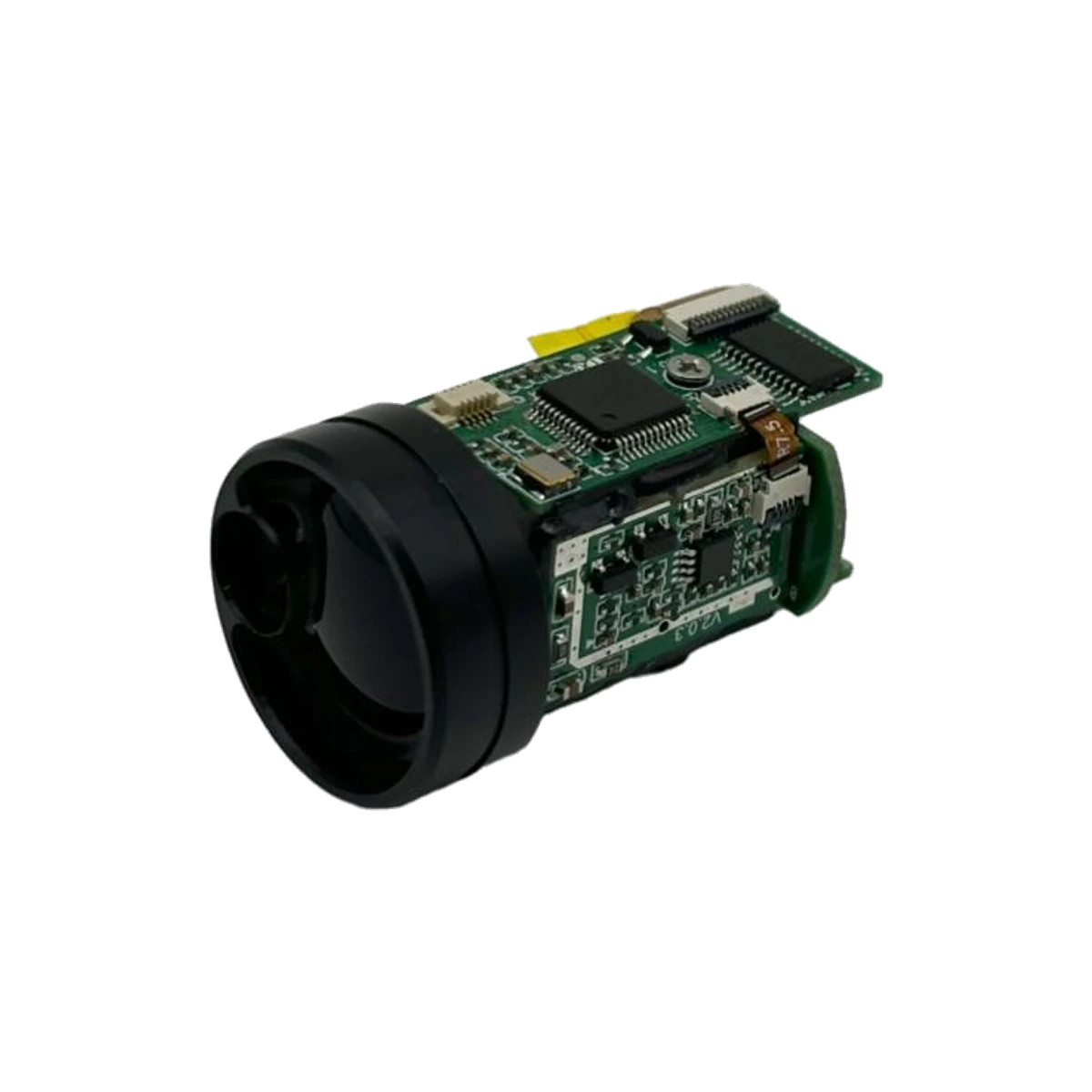
3.3 V ± 0.1 V — tighter than the rest of the catalog.
Bring the measurement conditions and integration constraints into the same review.
01Send the cavity, get the model+
Internal barrel diameter, usable length, the aperture you can give the optics and the working range you sell against. The source dimensions for LRF1200A1 differ: Ø23 × 40 mm or Ø23 × 48 mm, with a stated 18 g weight. Confirm the supplied drawing before fixing the housing; below that envelope the catalog moves to the SPD-series cylinders at Ø15.7 × 21.3 mm and ≈ 5 g.
02Two checksums, two scopes+
LRF1200A1’s transmit frame and its reply frame do not verify the same span of bytes. Implement them separately; treating the two verification scopes as identical is the integration bug that shows up as intermittent frame rejection rather than as a clean failure.
03The two open fields+
Protection rating and operating temperature are both “on request” on this model. Ask for them in the same email as your first sample order — they are the two numbers that will end up printed on your own product’s box.
From the module to the host.
LRF A series · UART, TTL 3.3 V
Transmit and reply checksums are computed over different scopes.
Check the supply, signal levels, pinout and output format for the exact model and revision. Request any missing detail before connecting your hardware.
LRF1200A1Related application pages
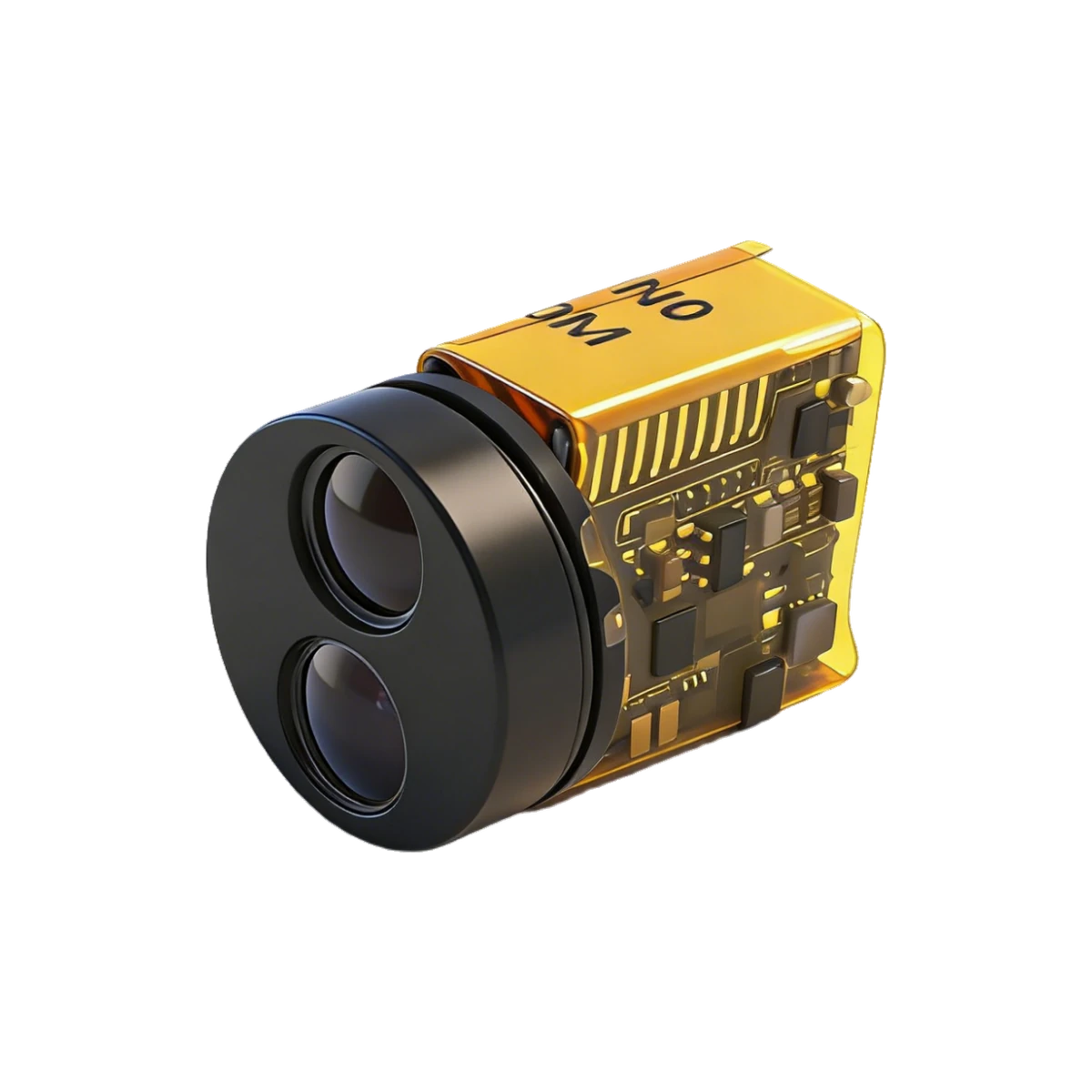
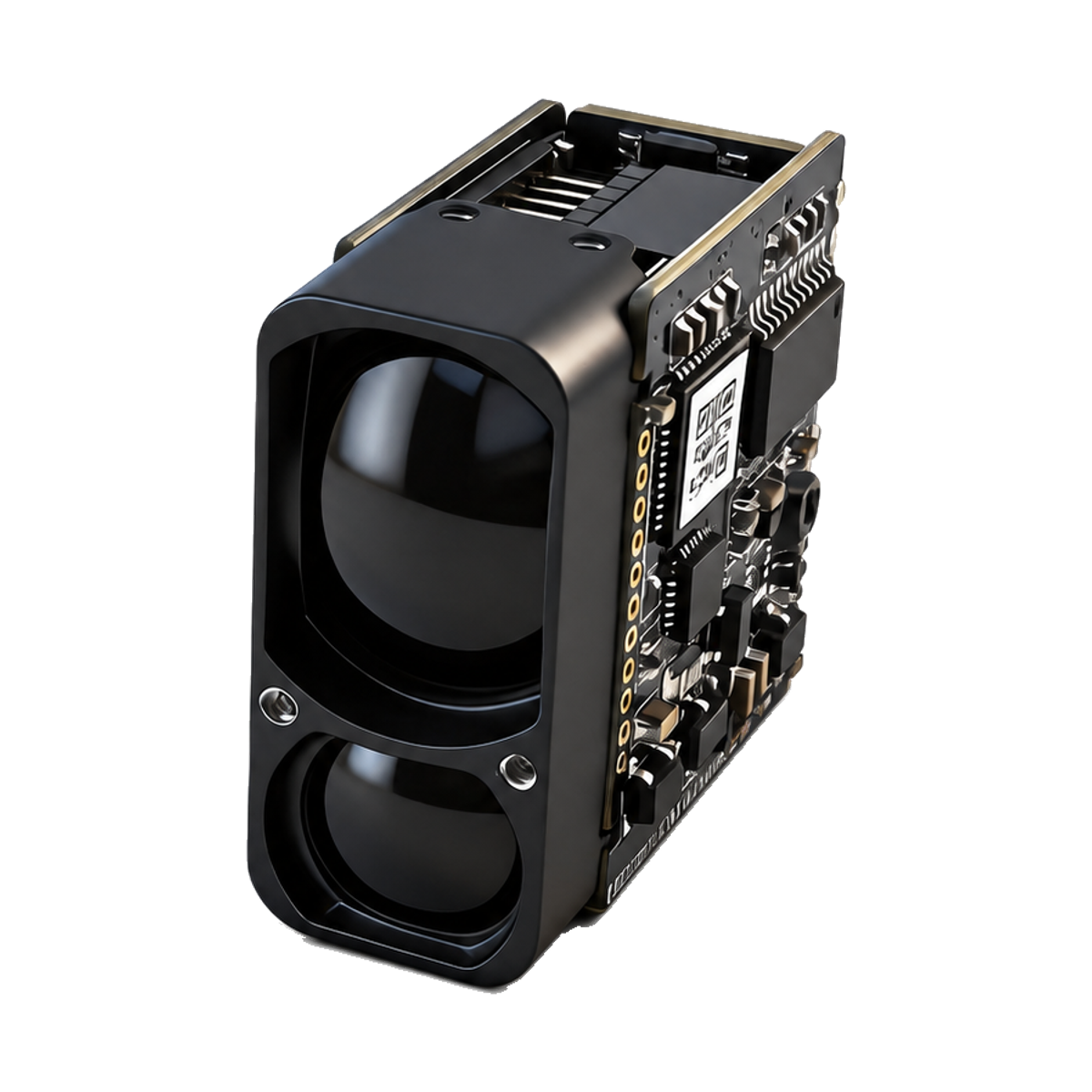
Share the model and distance for a technical review.
Share the distance, object surface, interface, space constraints and quantity. Include a model number if you already have one in mind.
±m versus %, and what the formula does at your working distance · Laser rangefinder serial protocol: frames and checksums · Optical observation: the same problem inside a night-vision or thermal housing
Confirm the current datasheet and laser safety documentation for the specific model and revision. Final suitability depends on your complete device and its operating conditions.