Mechanical fit
33 × 34 × 18 mm
Discuss integration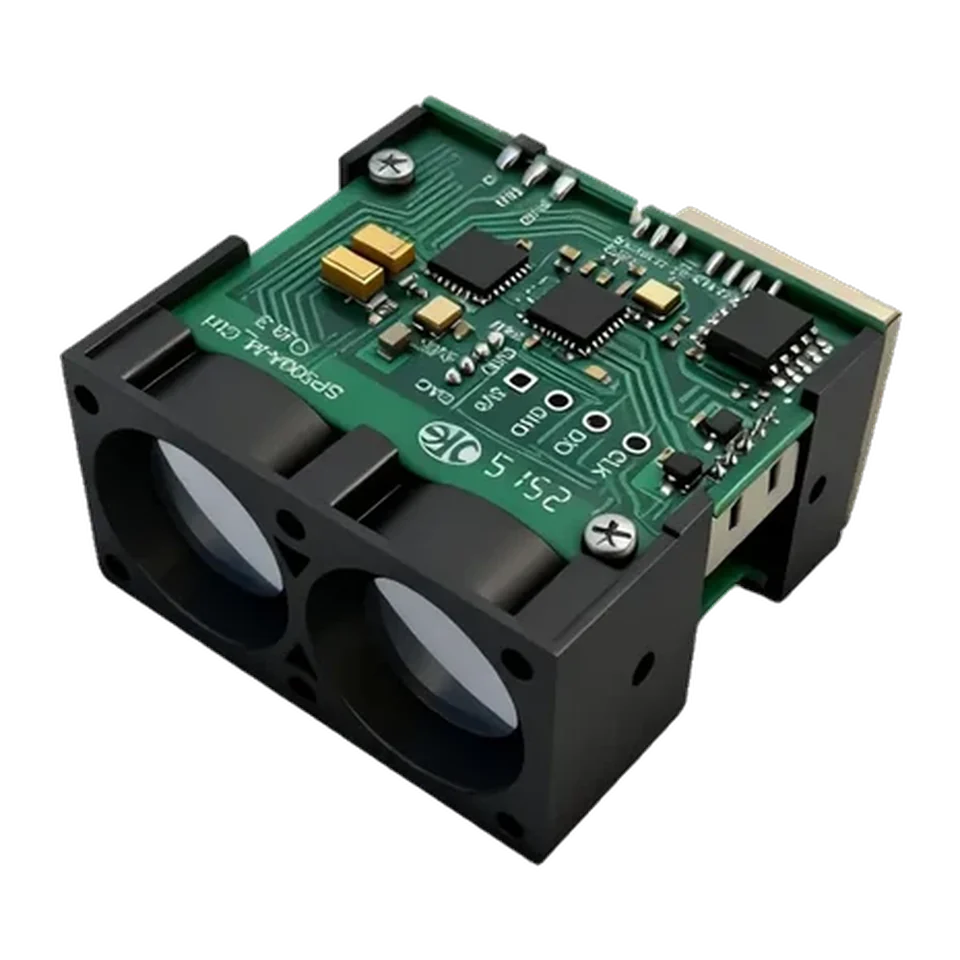
H series
The ERDI LRF600H is a 905 nm laser rangefinder module with 600 m published range, 20 g weight, UART/I2C interface, from $350 per piece with free worldwide shipping. Specs verified:
905 nm LiDAR Distance Sensor.
Built into your next design.
1 pc $350501+ pcs from $160Published unit prices, shipping included · Quantity options
MOQ 1 pc · Free worldwide shipping · Reply within 24 h
Standard warranty: one year
Lead time stated on your PI before payment
Shipped by DHL to customers in the US, India and Ukraine
Published price · shipping included worldwide · pay by card or PayPal, or by bank transfer. Volume price applies automatically.
Added to cart. Go to checkout →
Card or PayPal · Bank transfer · Free worldwide shipping
| Quantity | Unit price | Subtotal at first quantity |
|---|---|---|
| 1–30 | $350 | $350 |
| 31–300 | $200 | $6,200 |
| 301–500 | $180 | $54,180 |
| 501+ | $160 | $80,160 |
The details
Read every value with its conditions. View the model documents for integration.
| Parameter | Specification & conditions |
|---|---|
| Measurement range | 0.05–600 m (90% reflectivity); 0.05–200 m (10% reflectivity)The two source values remain bound to their stated target reflectivity. |
| Measurement frequency | 1 kHz or 50 Hz (automatically switched to match reflected-signal intensity) |
| Accuracy | ±10 cm (<10 m); 1% (≥10 m) |
| Repeatability | ±5 cm (<10 m); ±50 cm at 600 m |
| Ambient-light immunity | 100 klx |
| Reported resolution | 1 cmFront-page feature statement; not an accuracy value |
| Parameter | Specification & conditions |
|---|---|
| Central wavelength | 905 nm |
| Photobiological safety | Class 1 |
| Field of view | About 4 mrad |
| Wavelength for indication | N/A |
| Photobiological safety for indication | N/A |
| Parameter | Specification & conditions |
|---|---|
| Supply voltage | 9–36 V DC |
| Peak current | 100 mA |
| Average current | 55 mA |
| Average power consumption | 1.2 W |
| Communication interface | UART/IIC, 3.3 V logic level (fixed, independent of the 9–36 V supply) |
| Parameter | Specification & conditions |
|---|---|
| Protection level | N/A |
| Dimensions | 33 × 34 × 18 mm |
| Weight | 20 ± 2 g |
| Operating temperature | −20 °C to +60 °C |
| Wire specification | 1.25 mm, 5P, 50 cm stranded wires |
| Customization | Available in appearance / structure / output protocol |
Use the current document revision for design review and confirm the ordered connector and mechanical configuration before release.
33 × 34 × 18 mm
Discuss integrationUART/IIC, 3.3 V logic level (fixed, independent of the 9–36 V supply)
Discuss integration9–36 V DC
Discuss integrationLRF600H 905 nm LiDAR Distance Sensor
LRF600H is a laser rangefinder module for industrial sensing, with a published test range of 600 m and a UART interface. Confirm target conditions, configuration and the current datasheet before integration.
LRF600H is a 600 m industrial DToF sensor (905 nm, 33 × 34 × 18 mm, 20 g) with automatic 1 kHz / 50 Hz switching, for traffic safety, shuttle vehicles and overhead cranes on 9–36 V.
WhatsApp about LRF600HPublished unit prices apply only to the stated quantity band. Configuration, qualification, tax and Incoterm details are confirmed in the quotation.
Integration library
Drawings, test conditions and application notes. Open the part you need.
Range is 0.05–600 m at 90% and 0.05–200 m at 10%, with the same housing as LRF300H. For 1500 m in the same body, use LRF1500H.
Compared with the E-family LR1000E2, LRF600H gives centimetre accuracy at short range and kHz output on industrial supplies.
Published unit prices start at $160 at 501+ pieces; see Volume Pricing for all quantity bands.
Figures are reproduced from the LRF600H datasheet. Read each value together with the test condition printed beside it.
| Parameter | Value | Source condition |
|---|---|---|
| Measurement range | 0.05-600 m (90% reflectivity); 0.05-200 m (10% reflectivity) | Range differs with target reflectivity. |
| Measurement frequency | 1 kHz or 50 Hz (automatically switched to match reflected-signal intensity) | Per model datasheet |
| Accuracy | ±10 cm (<10 m); 1% (≥10 m) | Per model datasheet |
| Repeatability | ±5 cm (<10 m); ±50 cm at 600 m | Per model datasheet |
| Ambient-light immunity | 100 klx | Per model datasheet |
| Reported resolution | 1 cm | Feature claim, not a measured accuracy |
| Parameter | Value | Source condition |
|---|---|---|
| Central wavelength | 905 nm | Per model datasheet |
| Photobiological safety | Class 1 | Per model datasheet |
| Field of view | About 4 mrad | Per model datasheet |
| Wavelength for indication | N/A | Per model datasheet |
| Photobiological safety for indication | N/A | Per model datasheet |
| Parameter | Value | Source condition |
|---|---|---|
| Supply voltage | 9-36 V DC | Per model datasheet |
| Peak current | 100 mA | Per model datasheet |
| Average current | 55 mA | Per model datasheet |
| Average power consumption | 1.2 W | Per model datasheet |
| Communication interface | UART/IIC | Per model datasheet |
| Parameter | Value | Source condition |
|---|---|---|
| Protection level | N/A | Per model datasheet |
| Dimensions | 33 × 34 × 18 mm | Per model datasheet |
| Weight | 20 ± 2 g | Per model datasheet |
| Operating temperature | -20°C to +60°C | Per model datasheet |
| Wire specification | 1.25 mm, 5P, 50 cm stranded wires | Per model datasheet |
| Customization | Housing, structure and output protocol can be customised | Per model datasheet |
Signal names and directions are transcribed from the model source.
| Pin | Signal | Function |
|---|---|---|
| 1 | 9-36V (red) | External power positive |
| 2 | Power GND (black) | External power negative |
| 3 | Port GND (yellow) | GND |
| 4 | TX (green) | Host RX |
| 5 | RX (blue) | Host TX |
These figures are extracted from the named model source without generative modification.
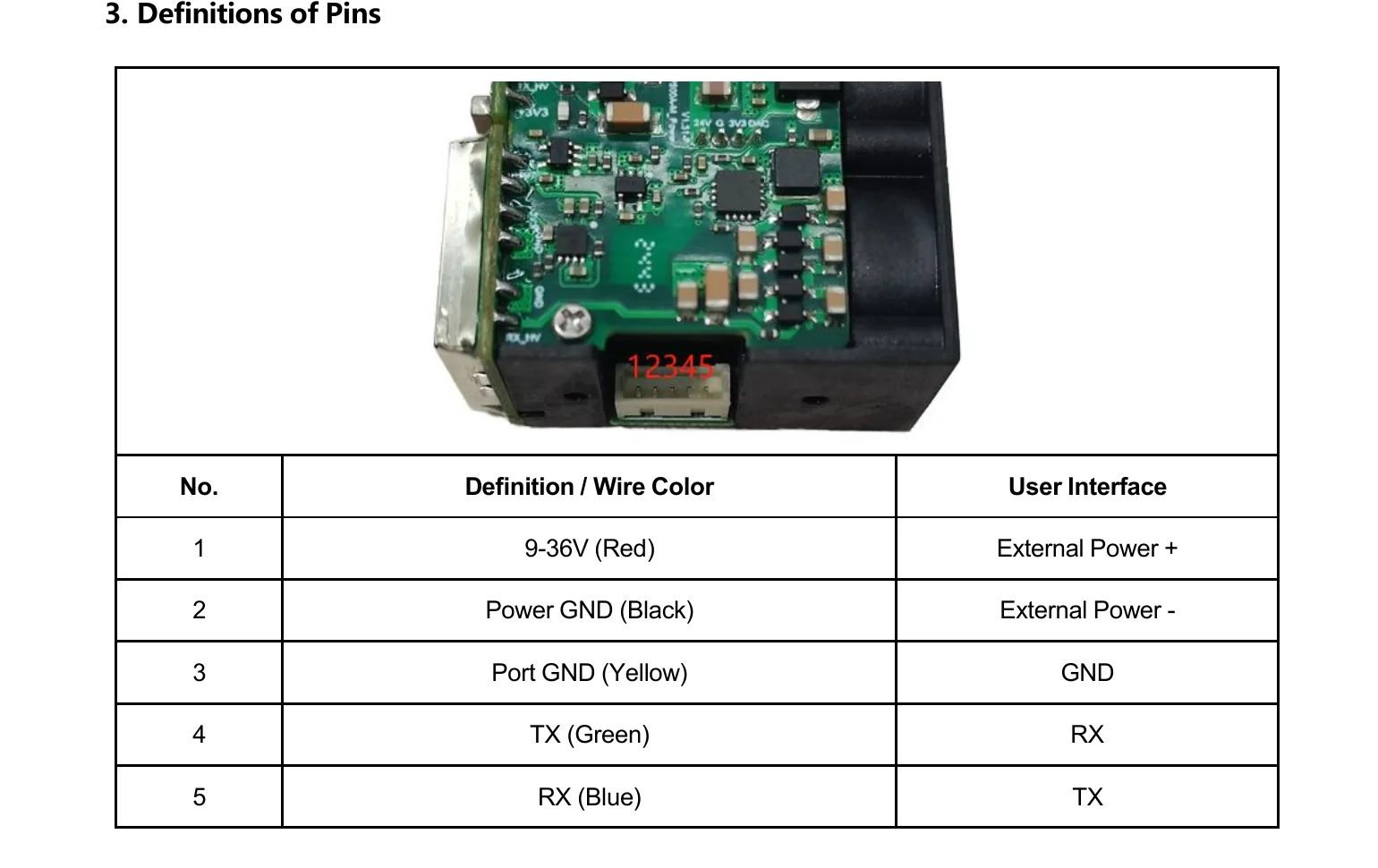
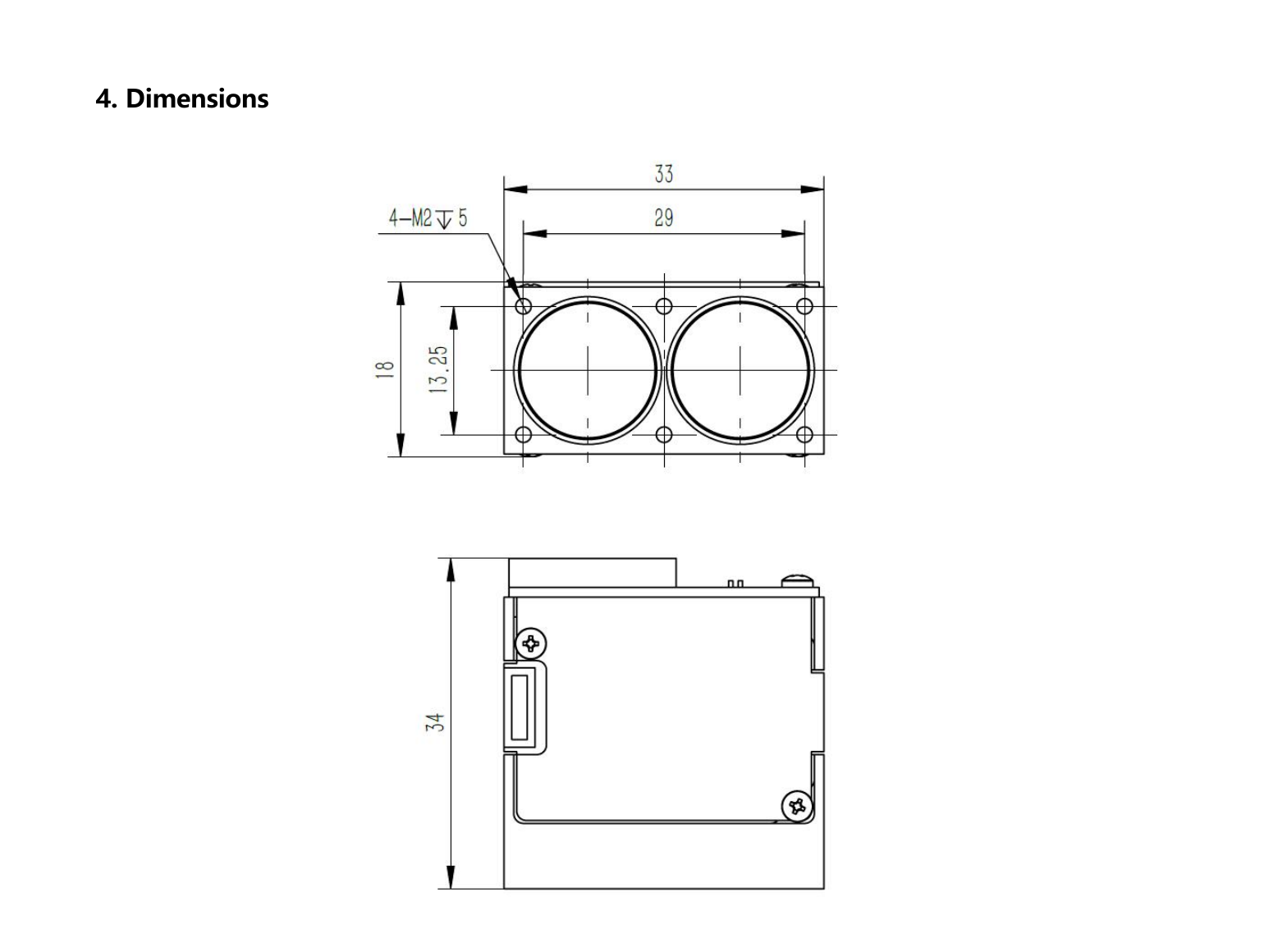
The retained LRF600H Specification V2.0 lists automatic 1 kHz/50 Hz measurement cadence, four-byte UART distance frames, 8N1 and an adjustable default baud rate of 460800. For a range-frame-only calculation with one start bit and one stop bit per eight-bit byte, four bytes require 40 line bits. An uninterrupted 1,000-frame/s stream therefore needs at least 40,000 bit/s; 50 frames/s needs 2,000 bit/s, before additional traffic or gaps. The listed 9600 setting cannot carry the first hypothetical stream. Confirm how the supplied firmware handles baud settings and adaptive cadence; the table does not establish every baud/cadence combination or guaranteed output under every target condition. Include your model/revision, host UART settings and required update behavior when contacting the ERDILRF marketing and technical support team through https://erdilrf.com/models/lrf600h/ or tommy@erdimail.com.
Source basis: retained LRF600H Specification V2.0, pages 2 and 4-6; printed revision-history date 25/03/05 (YY/MM/DD). Confirm the applicable document and firmware for the supplied unit.
About 200 m at 10% reflectivity.
It switches between 1 kHz and 50 Hz with signal strength.
UART and IIC.
Taken from the LRF600H outline drawing and user manual. Check hole positions against the drawing or the STEP file before machining a bracket.
Four M2 threaded holes on the lens face, 5 mm thread depth, on a 29 x 13.25 mm pattern. Use M2 screws that engage no more than 5 mm.
Request the LRF600H STEP model for your bracket design.
| Pin | Signal | Wire | Connection |
|---|---|---|---|
| 1 | 9-36 V | red | external power + |
| 2 | Power GND | black | external power - |
| 3 | Port GND | yellow | signal ground |
| 4 | TX | green | connect to host RX |
| 5 | RX | blue | connect to host TX |
| Command | Send (hex) | Reply (hex) | Notes |
|---|---|---|---|
| Read serial number | 5A 0D 02 0D 0D D6 | 5A 8D 02 10 01 5F | Reply 10 01 = serial number 272 (little-endian). |
| Read firmware version | 5A 16 02 16 16 BB | 5A 96 02 03 02 62 | Reply 03 02 = V2.3. |
| Set baud rate to 115200 | 5A 06 02 80 04 73 | 5A 86 02 80 04 F3 | Little-endian codes: 60 00 = 9600, C0 00 = 19200, 80 01 = 38400, 80 04 = 115200, 00 09 = 230400, 00 0A = 256000, 00 12 = 460800. |
Frames follow the LRF600H user manual; every full frame has been checked against the manual's checksum rule. Open-source drivers: Drivers & wiring.
Engineering Q&A
Answered by ERDI engineers in the community.
Use the integration path that matches your host:
Laser class as stated in the module document. Classification of your finished product depends on its optical path and configuration.
Inspect the model in your browser, or ask for the STEP file for your design review.
Request 3D STEP model — reply within 24 hSame series
Open a nearby model to compare range, SWaP and interface choices.
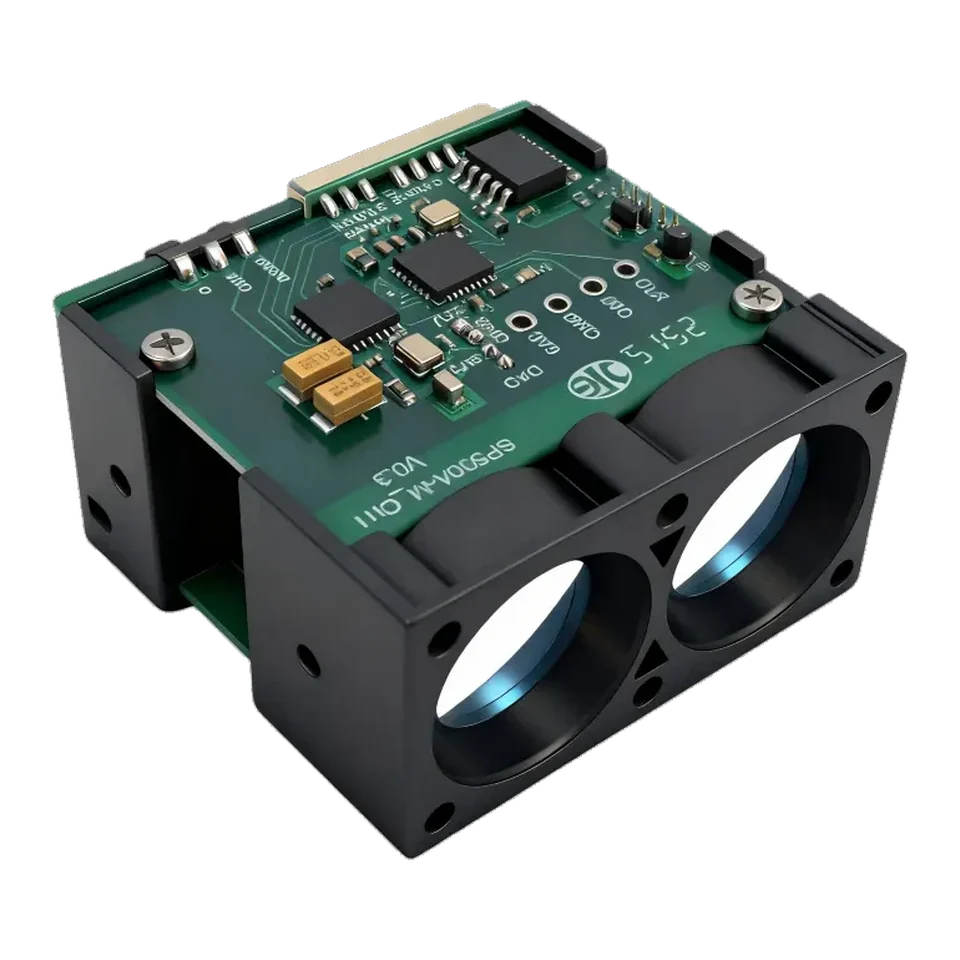
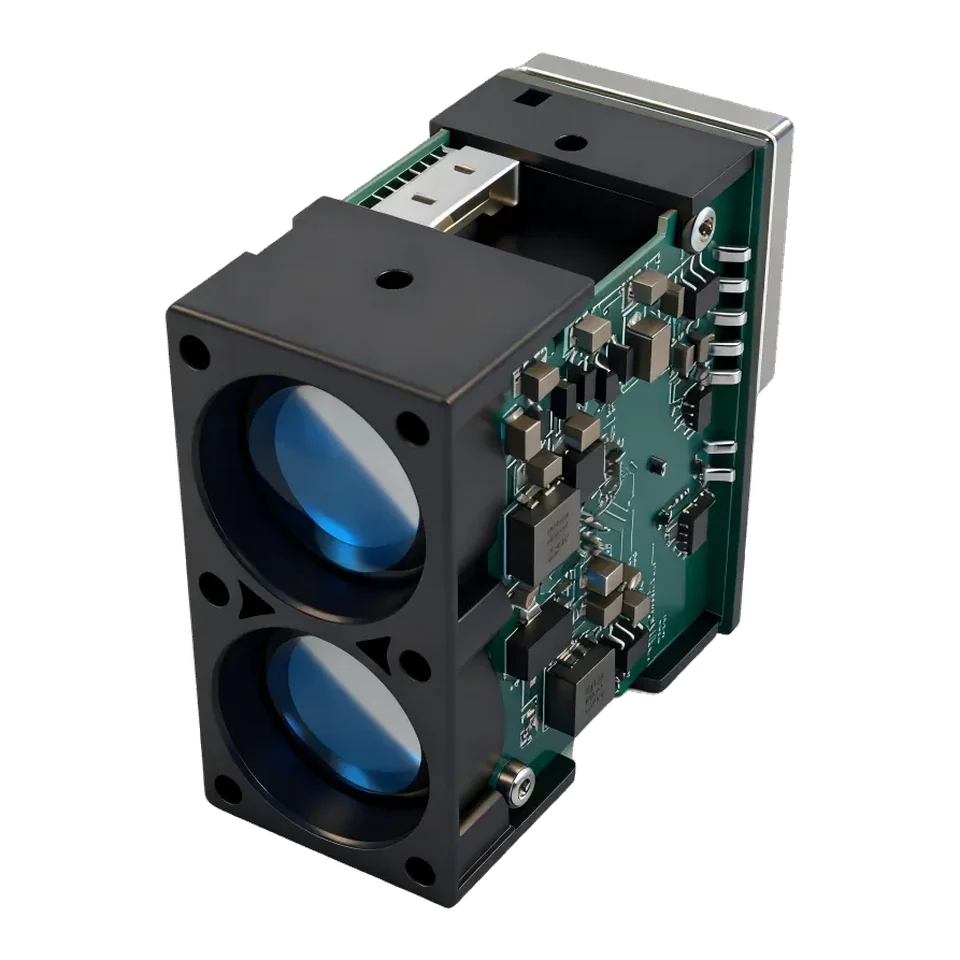
LRF300H 300 m Industrial DToF LiDAR Distance Sensor for UAV Platforms, Tower Cranes and Traffic Early Warning
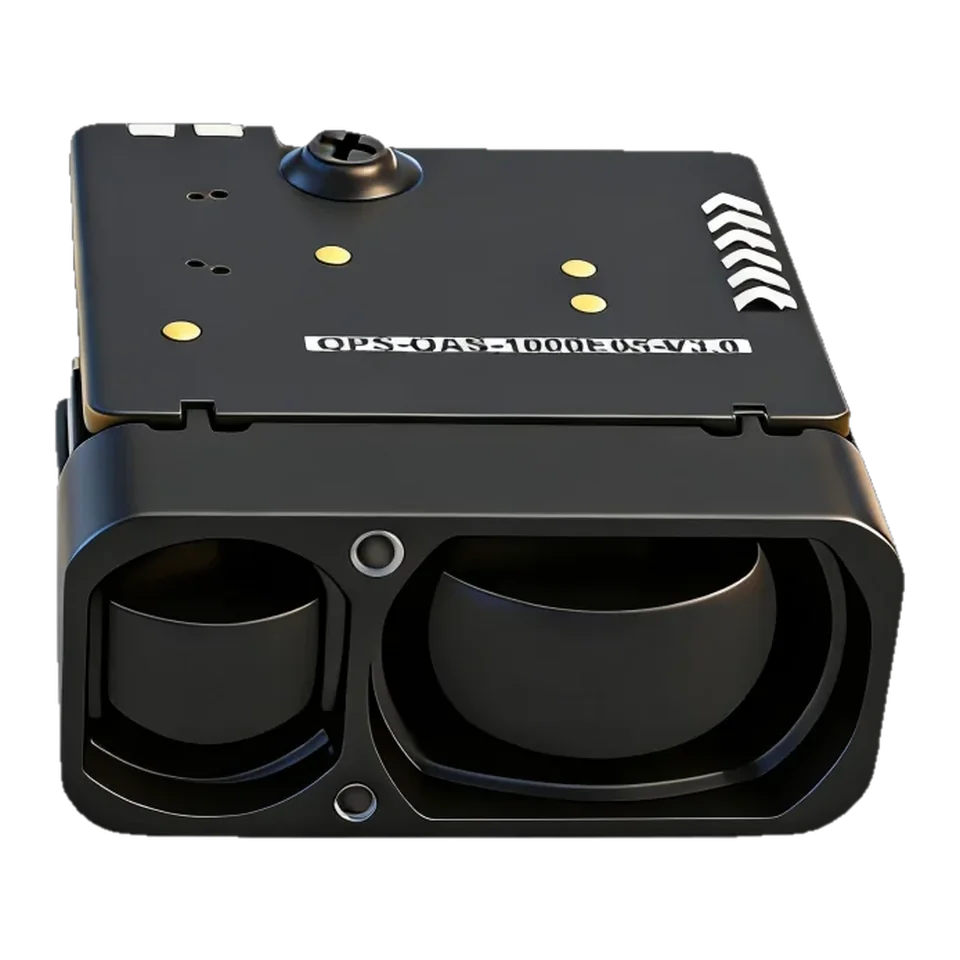
LRF200H 200 m Industrial DToF LiDAR Distance Sensor for Port Cranes, Long Conveyors and Tunnel Safety
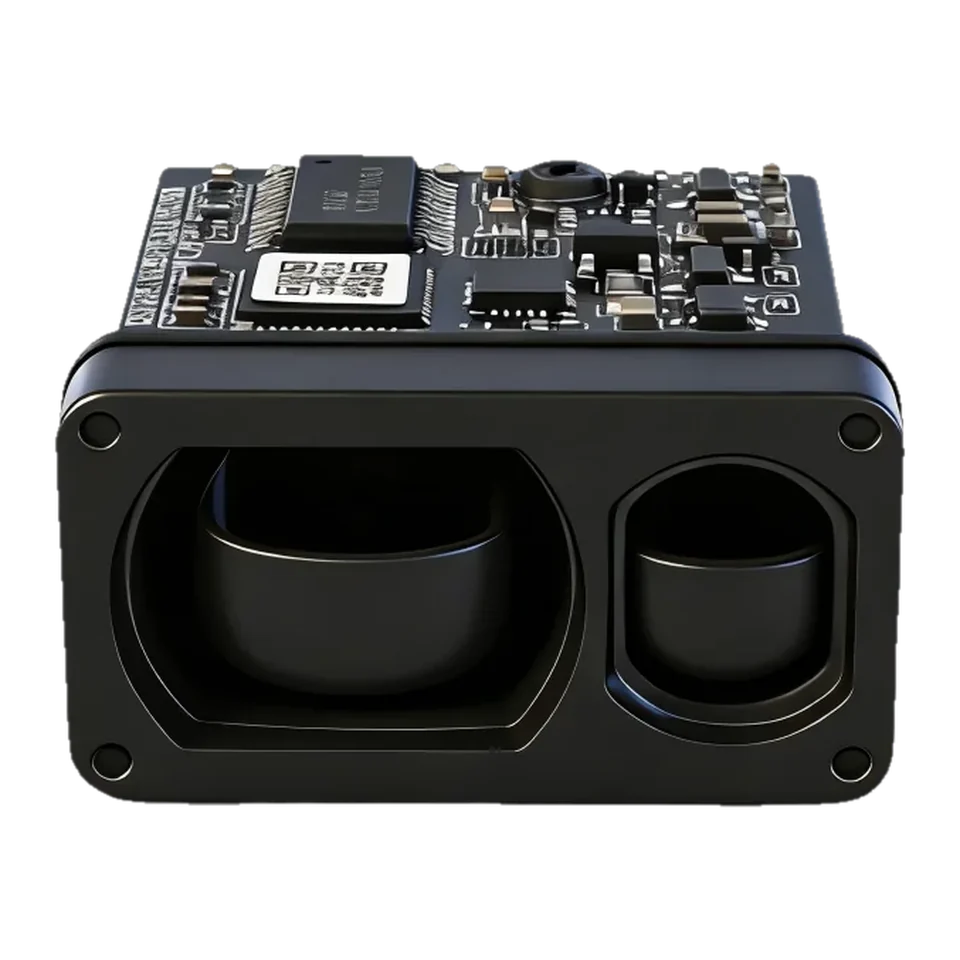
LR1000E2 905 nm Laser Ranging Module
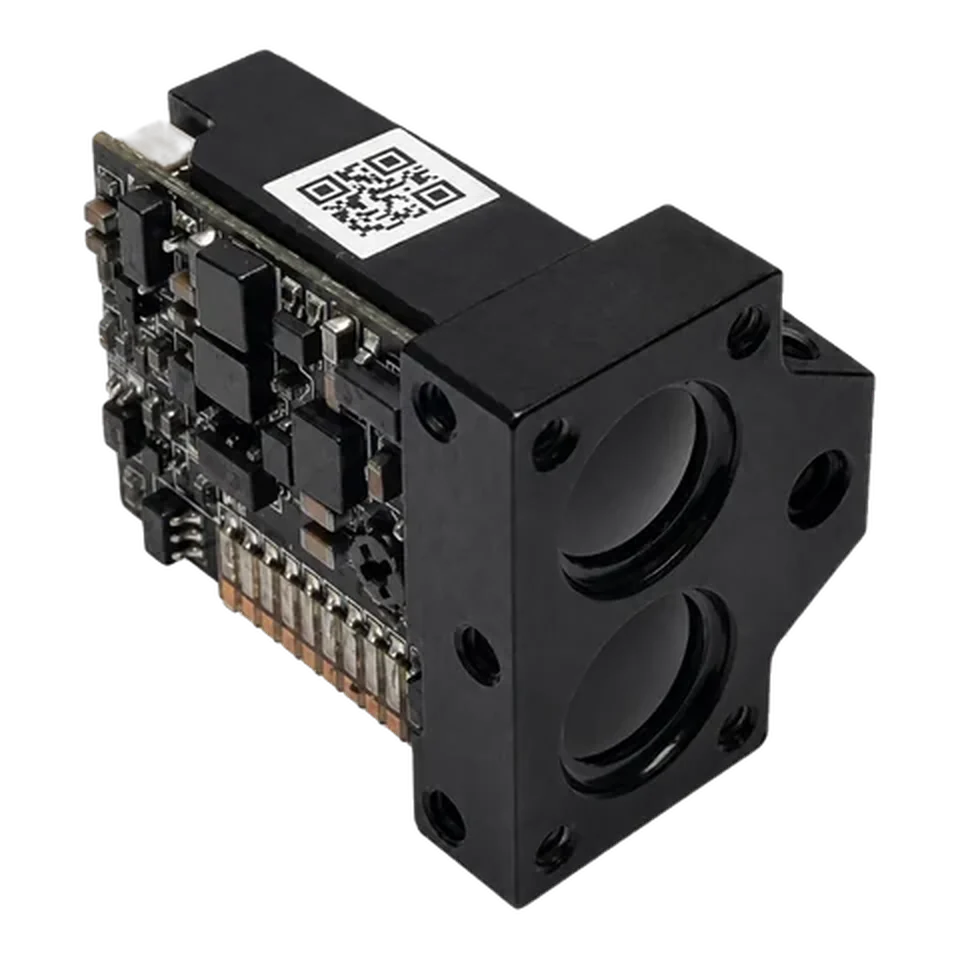
LR1000E4 905 nm Laser Ranging Module
SPD1200N3 905 nm Single-Photon Laser Rangefinder with Laser Indicator
Technical inquiry
Share the target, range, interface and expected quantity. Your selected model stays attached to the inquiry.