Field notes from the people who build the modules: how 905 nm direct time-of-flight ranging actually works, how to read our datasheets, and how to design our modules into your platform.
Download the 905 nm Technical Guide (PDF) ↗
-
Laser Rangefinder Timestamps: Match Results to Requests
Define request ownership, response matching and recovery after timeouts so a valid range report is not attached to the wrong measurement event.
-
Protective Windows for Laser Rangefinders: Acceptance Checklist
Turn a protective-window proposal into a reviewable drawing and a before-and-after test record, with clear transmission and assembly conditions.
-
Mixed Returns: Which Target Does a Laser Rangefinder Measure?
Plan a controlled foreground-and-background evaluation so a plausible distance is not mistaken for proof that the intended object was measured.
-
Laser Rangefinder Minimum Distance: 0.05 m to 5 m
Across ERDILRF 905 nm modules the documented closest measuring distance ranges from 0.05 m to 5 m, and the same raw code marks out-of-range.
-
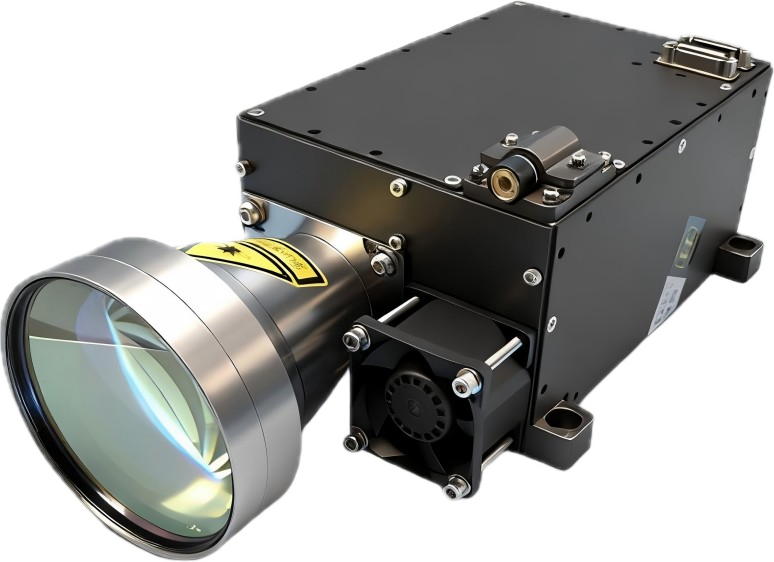
1570 nm single-aperture laser rangefinder
One shared optical aperture. An integrated 1570 nm ranging solution with a specified mass of ≤2.9 kg, beam divergence of ≤0.4 mrad and an RS422 interface.
-
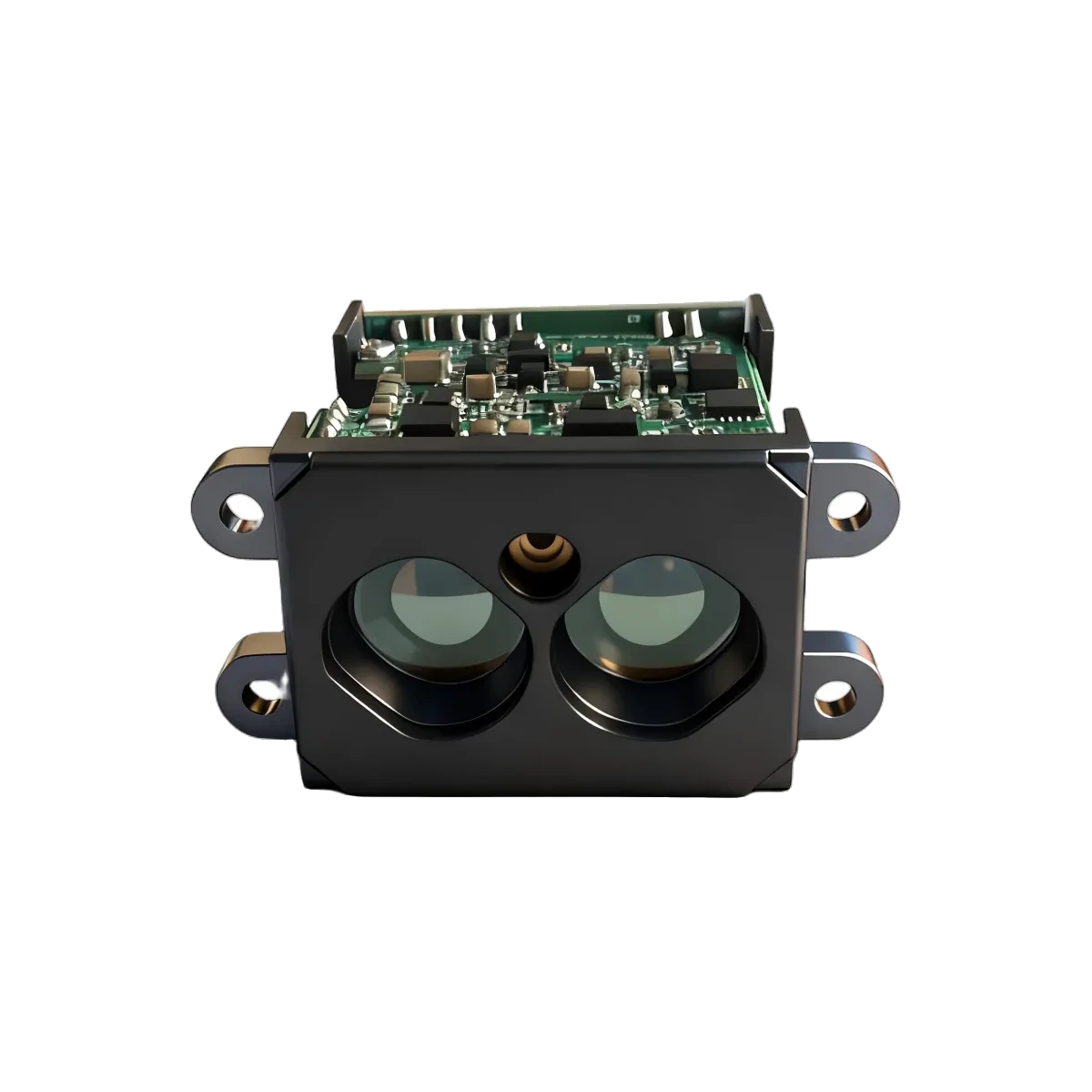
LRF50H: Reduce Threshold Chatter with Hysteresis
Use separate near and far thresholds for an LRF50H indicator, with explicit rules for invalid readings, expiry and recovery inside the band.
-
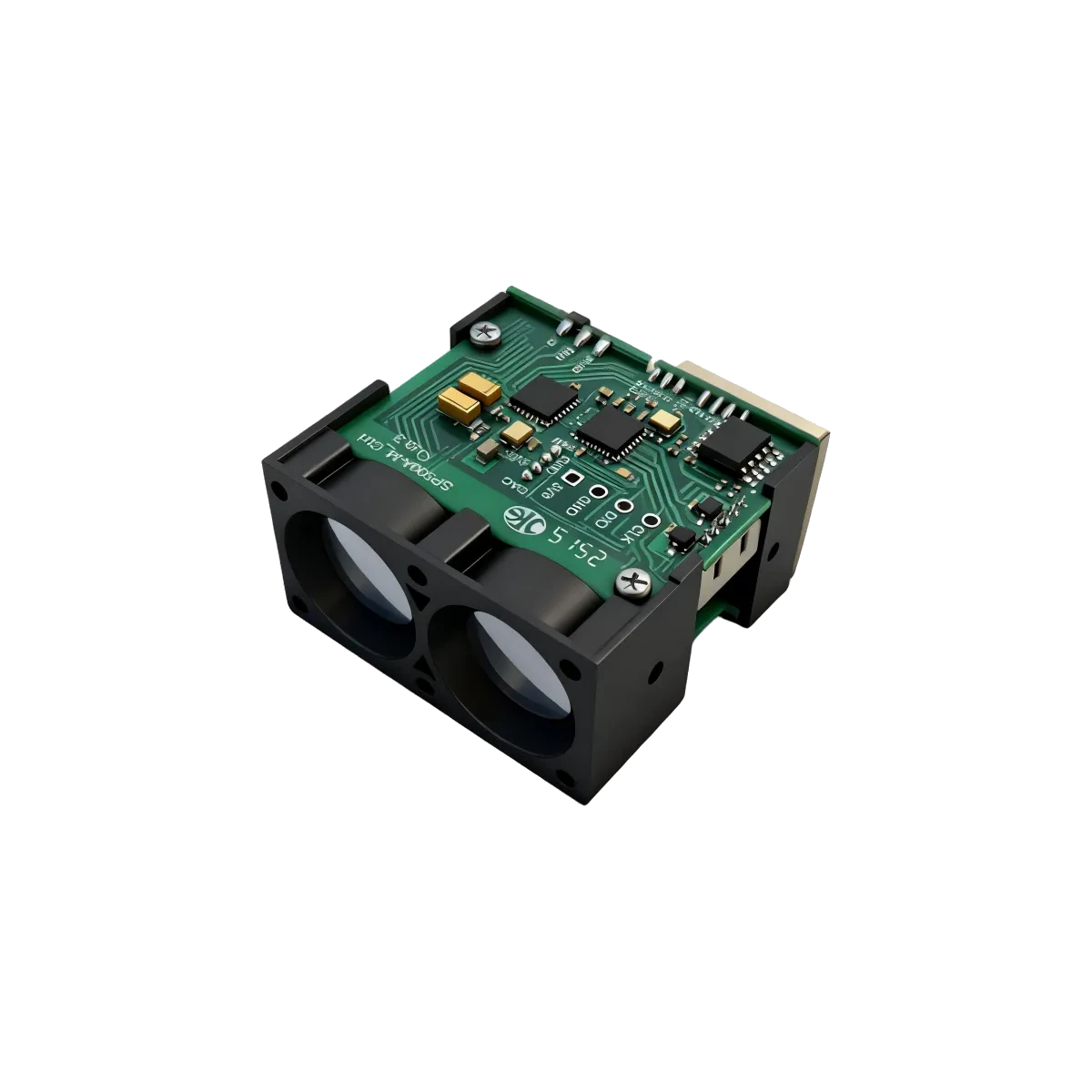
LRF600H: Set a Receive-Gap Alarm
Separate byte activity, checked reports and usable distances. Calculate an illustrative receive-gap threshold and replay its exact alarm boundaries.
-
LRF50H: How Large Reads Add Display Delay
Separate serial read size from buffer capacity. Calculate batching delay and replay timed inputs to check why a distance display updates in bursts.
-
LRF50H: Decode Distance Without Signed-Byte Errors
Use seven distance-field fixtures to distinguish signed-byte errors, reversed byte order and unit conversion mistakes in an LRF50H host decoder.
-
LRF50H: Plan Clearance at a Target Edge
Budget plate width, light-spot diameter and installation movement for LRF50H, then check the edges without treating geometry as a ranging guarantee.
-
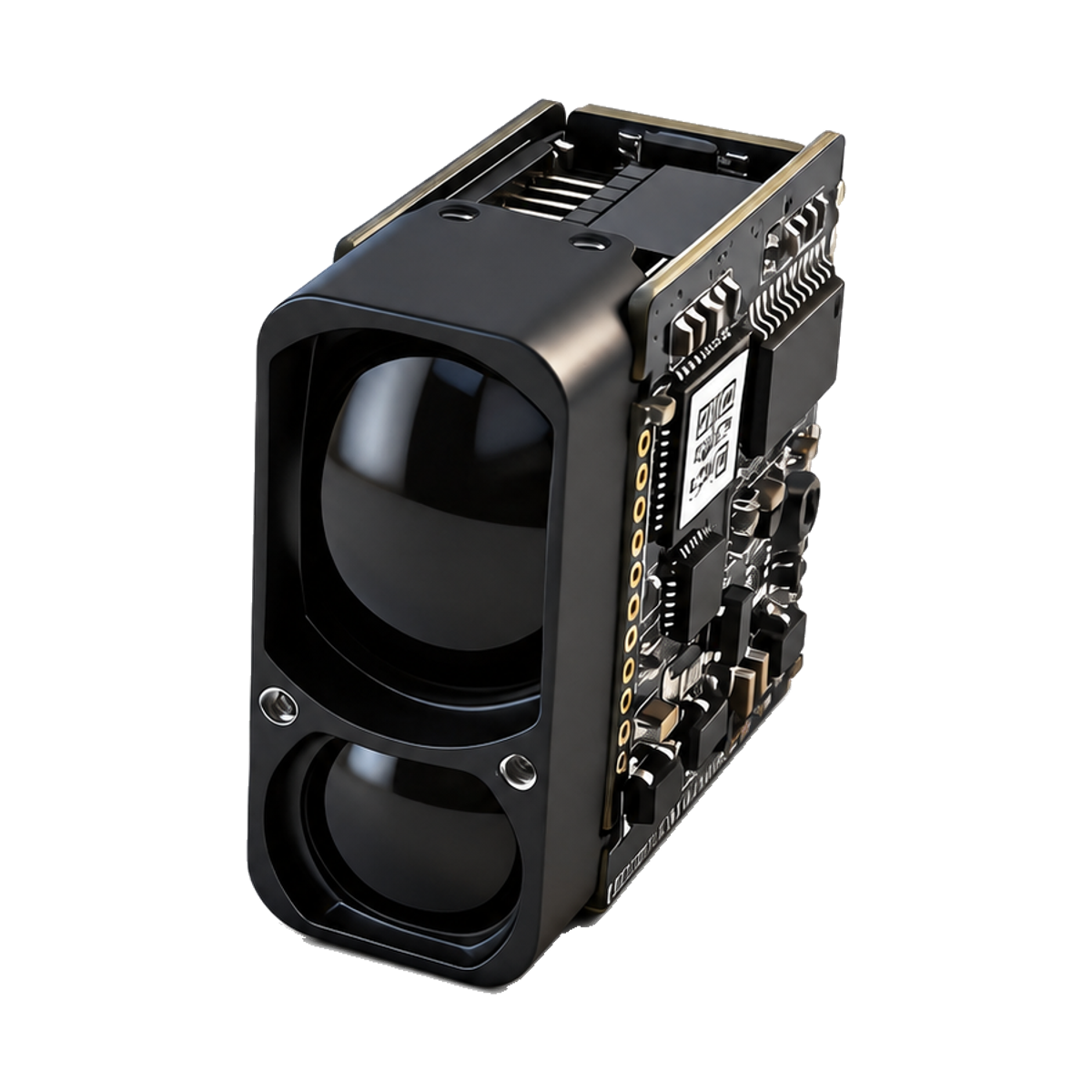
LR2000E2: What 20 Valid Readings Cannot Prove
A perfect short record can hide weak evidence. Calculate a one-sided confidence bound and keep sensor validity separate from host data loss.
-
LRF50H: Separate Offset from Repeatability
A steady reading can still be wrong. Compare mean error and sample spread with a worked example and a practical LRF50H fixture-check procedure.
-
LRF600H: Keep Filter Timing Stable as Rate Changes
Calculate how adaptive measurement rates change smoothing delay, then check a time-based filter with explicit assumptions and replay cases.
-
LRF50H: Keep Invalid Values Out of Averages
A worked LRF50H example shows how invalid readings distort averages, with checks for valid counts, empty windows, stale data and recovery.
-
Rangefinder Enable Pins: Polarity & Wake Time
Compare active-high and active-low enable pins, published standby states, and a bounded wake-up budget without calling it a measurement.
-
UART Bandwidth: Can a Host Keep Up at 10 kHz?
Calculate UART wire load and host buffer time for a four-byte rangefinder stream, with explicit assumptions and a practical receive-path checklist.
-
Laser Rangefinder Module With a Built-In Gyroscope
SPD1200S2G gyroscope specs: two-point span error, 0.3 deg tilt accuracy, 0.75 deg heading in 10 s, and how it compares with three SPD siblings on size.
-
Laser Rangefinder Module Pinout & Wire Colors
Pin-by-pin wiring for 905 nm rangefinder modules: 5-pin vs 6-pin, wire colours, connector part numbers, and which logic levels are unpublished.
-
Laser Rangefinder Module Datasheet: What to Check
Six datasheet fields decide whether a 905 nm rangefinder module fits: minimum range, accuracy per band, update rate, interface, size, sealing.
-
Long-Range Laser Rangefinder Module: 300-3000 m
How the 300 m, 600 m, 1500 m and 3000 m 905 nm modules compare: reflectivity-derated range, repeatability, serial frame width and supply rail.