Performance envelope
Measurement range: 0.05-50 m (90% reflectivity); 0.05-15 m (10% reflectivity) · Accuracy: ±5 cm (<10 m); 1% (≥10 m), 2σ
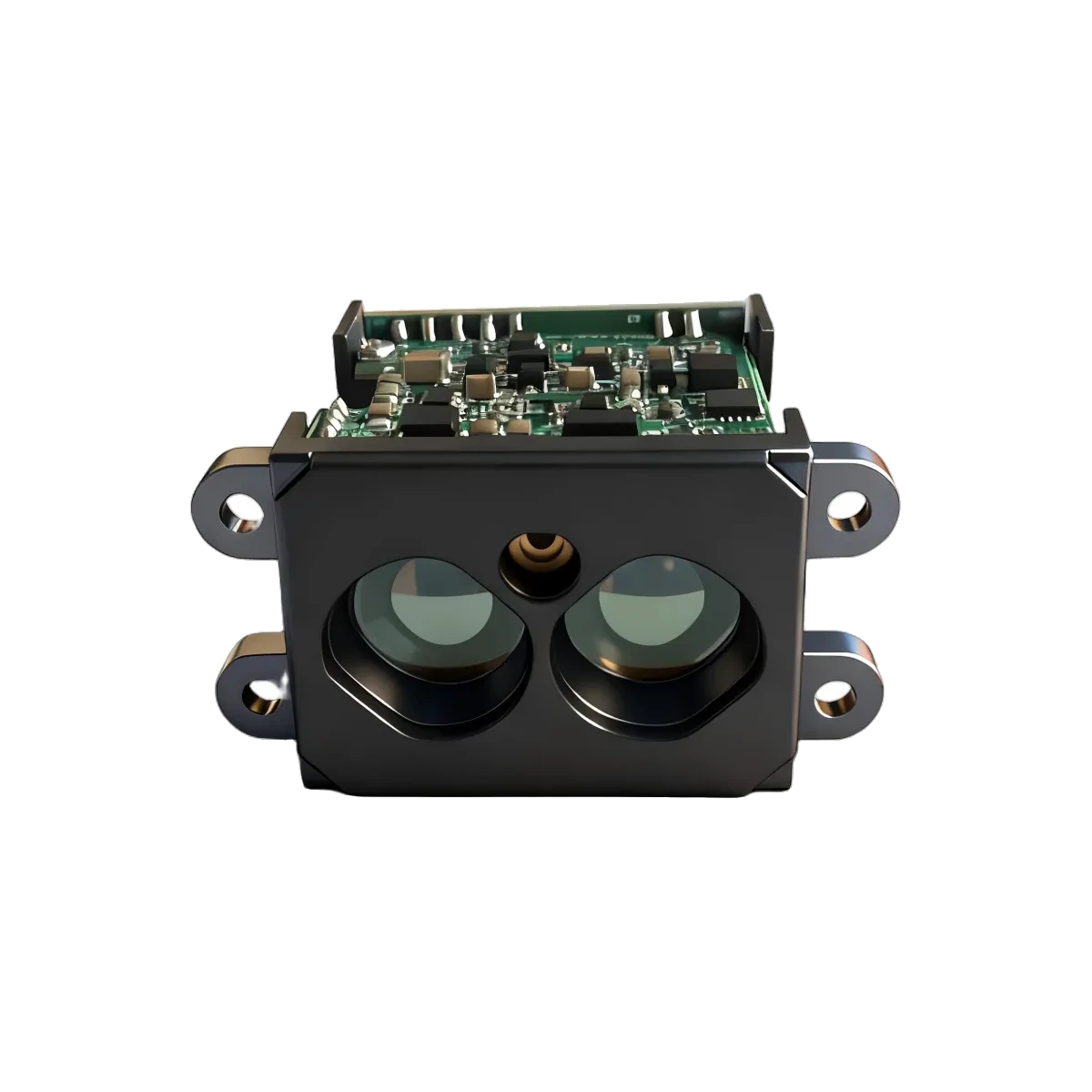
Authentic product views from the ERDI product record. Use the controlled mechanical drawing and connector definition for design release.
Open dedicated 3D viewerOEM laser ranging and photonics module
Product model LRF50H
LRF50H is a 905 nm direct time-of-flight ranging module specified for 0.05-50 m at 90% reflectivity and 0.05-15 m at 10% reflectivity. Its V3.0 document specifies 20 Hz-10 kHz operation with 1 kHz default, UART communication and a 9-36 V DC input.
Use the current controlled document revision for design review and confirm the ordered connector and mechanical configuration before release.
Published unit prices apply only to the stated quantity band. Configuration, qualification, tax and Incoterm details are confirmed in the quotation.
Every value below is bound to the model source named on this page. Qualifiers and test conditions are retained; missing values are not inferred.
| Parameter | Value | Source condition |
|---|---|---|
| Measurement range | 0.05-50 m (90% reflectivity); 0.05-15 m (10% reflectivity) | The two source values remain bound to their stated target reflectivity. The source marks this parameter as measured at 25°C in an indoor environment. |
| Measurement frequency | 20 Hz-10 kHz (default: 1 kHz) | Confirm against the controlled model document |
| Accuracy | ±5 cm (<10 m); 1% (≥10 m), 2σ | Confirm against the controlled model document |
| Repeatability | ±5 cm | Confirm against the controlled model document |
| Ambient-light immunity | 45 m at 100 klx | 90% reflector in an outdoor environment at 25°C, per source footnote. |
| Reported resolution | 1 cm | Front-page feature statement; not an accuracy value |
| Parameter | Value | Source condition |
|---|---|---|
| Central wavelength | 905 nm | Confirm against the controlled model document |
| Photobiological safety | Class 1 | Confirm against the controlled model document |
| Field of view | About 4 mrad | Confirm against the controlled model document |
| Wavelength for indication | 650 nm (visible red light) | Confirm against the controlled model document |
| Photobiological safety for indication | Class 2 | Confirm against the controlled model document |
| Parameter | Value | Source condition |
|---|---|---|
| Supply voltage | 9-36 V DC | Confirm against the controlled model document |
| Peak current | 24 V at 100 mA | Confirm against the controlled model document |
| Average current | 24 V at 34 mA | Confirm against the controlled model document |
| Average power consumption | 0.8 W | Confirm against the controlled model document |
| Communication interface | UART | Confirm against the controlled model document |
| Parameter | Value | Source condition |
|---|---|---|
| Protection level | N/A | Confirm against the controlled model document |
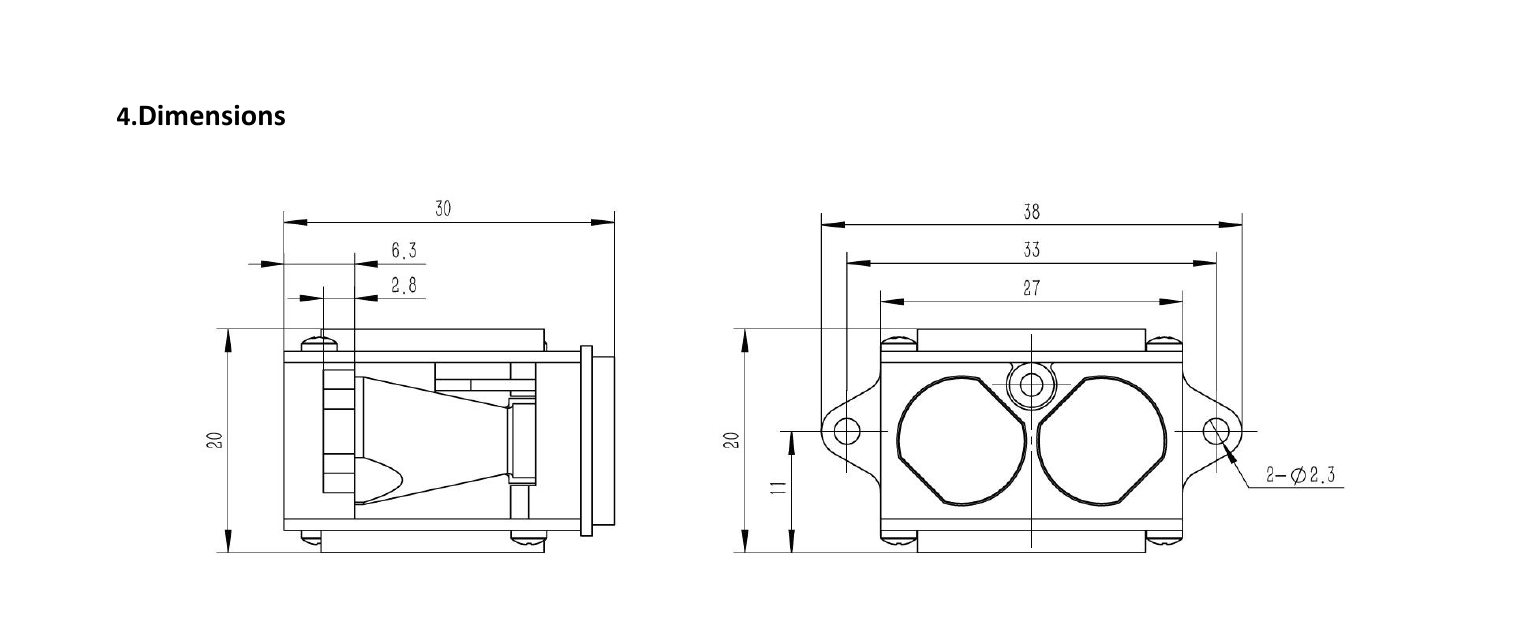
| Dimensions | 38 × 20 × 30 mm | Confirm against the controlled model document |
| Weight | 15 ± 2 g | Confirm against the controlled model document |
| Operating temperature | -20°C to +60°C (no condensation; indication red light automatically turns off below -20°C) | Confirm against the controlled model document |
| Wire specification | 5-pin 1.25 mm terminal, M1250V-05P, with 50 cm tinned loose wire | Confirm against the controlled model document |
| Customization | Available in appearance / structure / output protocol | Confirm against the controlled model document |
The coaxial 650 nm aiming light can be switched on or off to support alignment and installation.
The source states that the aiming light automatically turns off below -20°C and that the specified operating range requires no condensation.
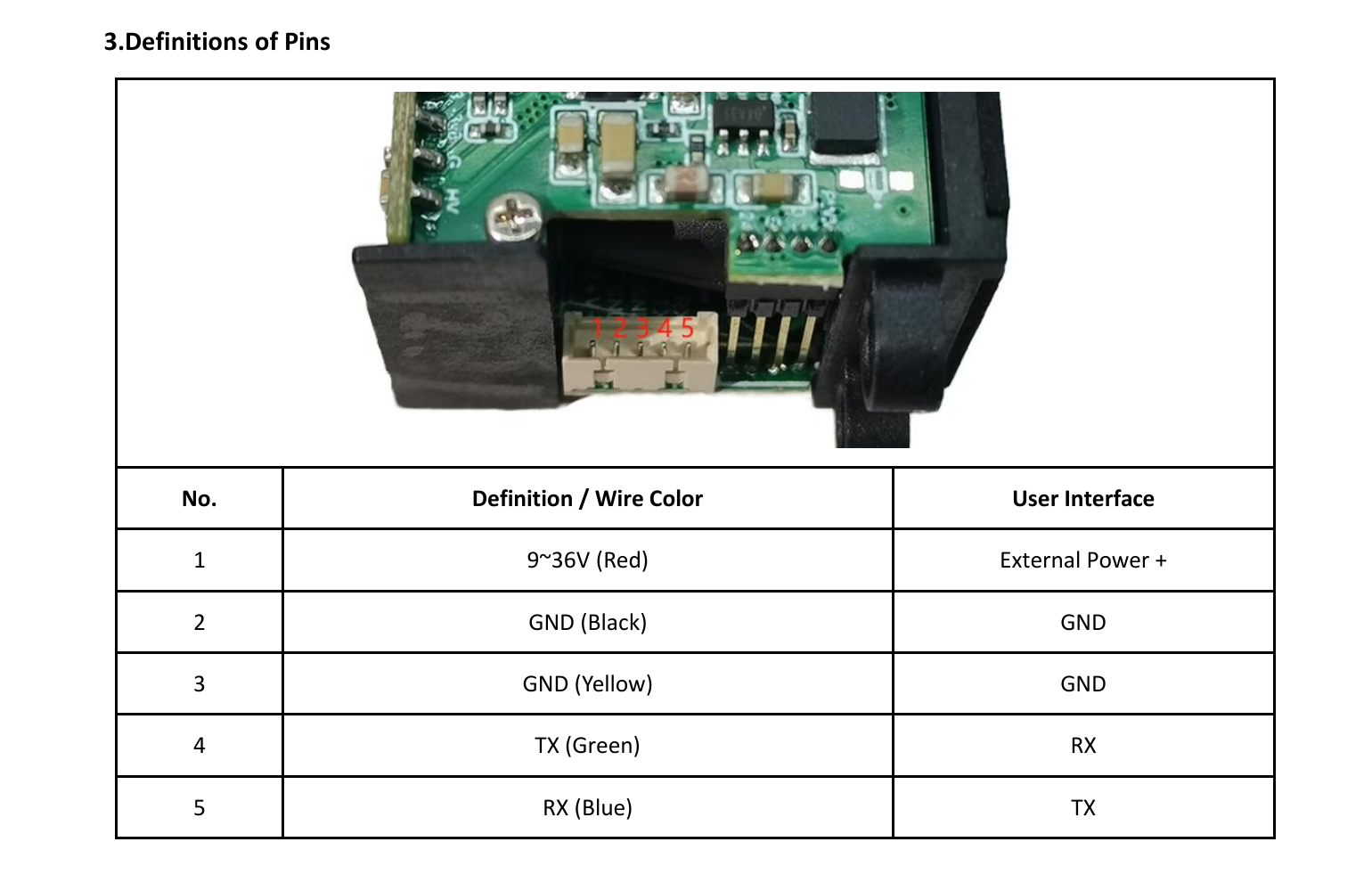
Signal names and directions are transcribed from the model source.
| Pin | Signal | Source-stated function |
|---|---|---|
| 1 | 9-36V (red) | External power positive |
| 2 | GND (black) | GND |
| 3 | GND (yellow) | GND |
| 4 | TX (green) | Host RX |
| 5 | RX (blue) | Host TX |
These figures are extracted from the named model source without generative modification.
The LRF50H model document identifies the product as direct time of flight (DToF). It determines distance from the delay between an emitted optical pulse and the accepted return.
Real performance also depends on target reflectivity and area, incidence angle, atmospheric attenuation, receiver aperture, background light, detector response, timing thresholds and contamination of the optical path.
These are traceable design inputs, not unsupported superlatives or guaranteed field outcomes.
Measurement range: 0.05-50 m (90% reflectivity); 0.05-15 m (10% reflectivity) · Accuracy: ±5 cm (<10 m); 1% (≥10 m), 2σ
Measurement frequency: 20 Hz-10 kHz (default: 1 kHz) · Reported resolution: 1 cm · Repeatability: ±5 cm
Supply voltage: 9-36 V DC · Communication interface: UART · Average power consumption: 0.8 W
Dimensions: 38 × 20 × 30 mm · Weight: 15 ± 2 g · Operating temperature: -20°C to +60°C (no condensation; indication red light automatically turns off below -20°C)
Application labels indicate where the source proposes evaluation; they do not prove fitness without system testing.
No. Use the reflectivity and environmental conditions shown beside the range row. Smaller, darker, oblique or partially obscured targets and degraded visibility can reduce received signal.
No. Resolution is the reporting increment, repeatability describes variation under repeated conditions, and accuracy describes closeness to the reference distance under the stated test method.
No. A module-level source statement does not replace the accessible-emission and failure-condition assessment of the finished equipment, its window, controls, service access and labeling.
The ordered connector drawing, pin definition and approved interface document control the design.
The model PDF controls product claims. Public references support only the general engineering explanations and must not be used to infer a missing model value.
Technical inquiry
Share the target, range, interface and expected quantity. Your selected model stays attached to the inquiry.
Same series
Open a nearby model to compare range, SWaP and interface choices.
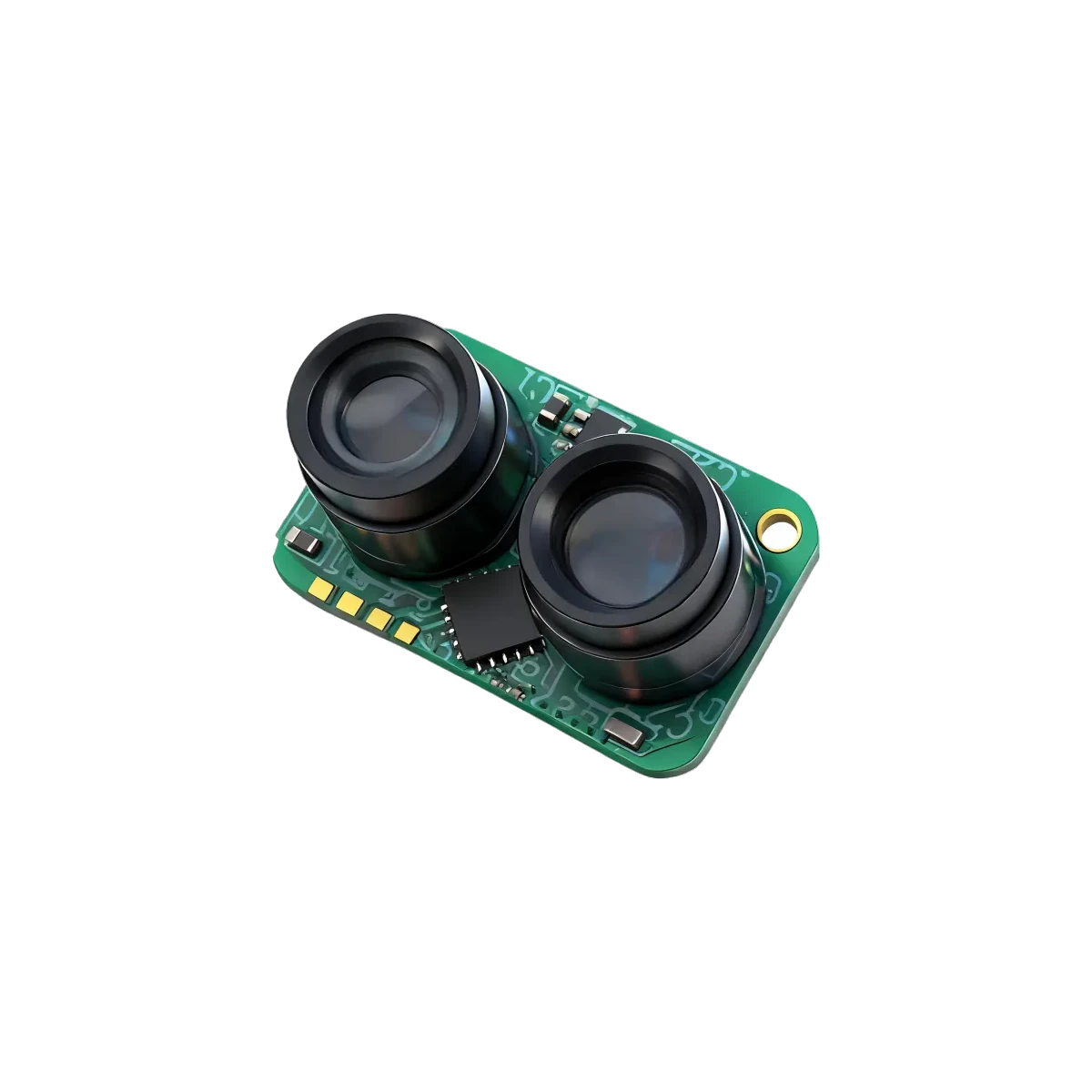
LRF50VB 50m Single-Point DToF LiDAR Sensor for Industrial Automation, AGV and Traffic Safety Monitoring
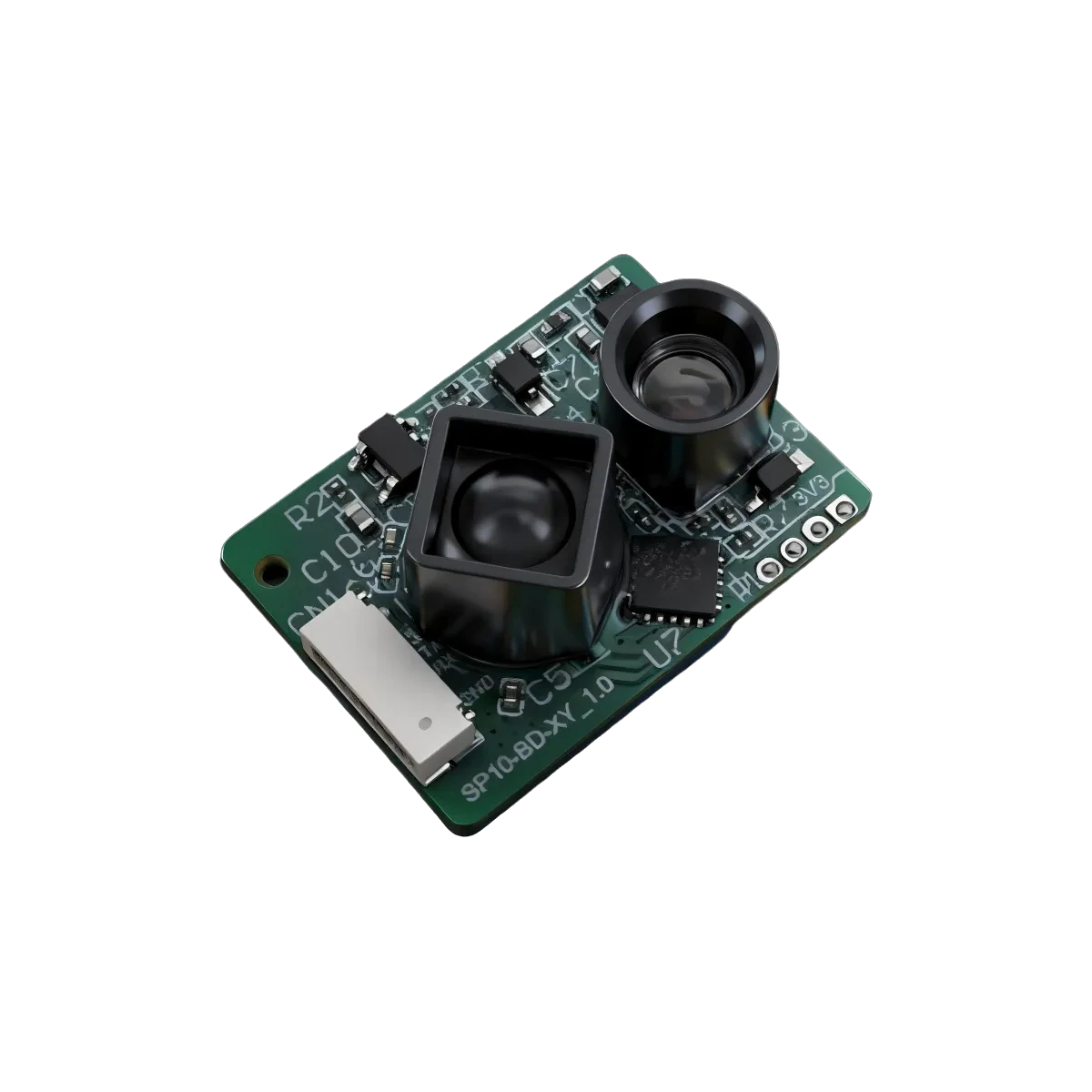
LRF22VB 20m Single-Point DToF LiDAR Sensor for Drone Altitude Hold, Robot and AGV Obstacle Avoidance
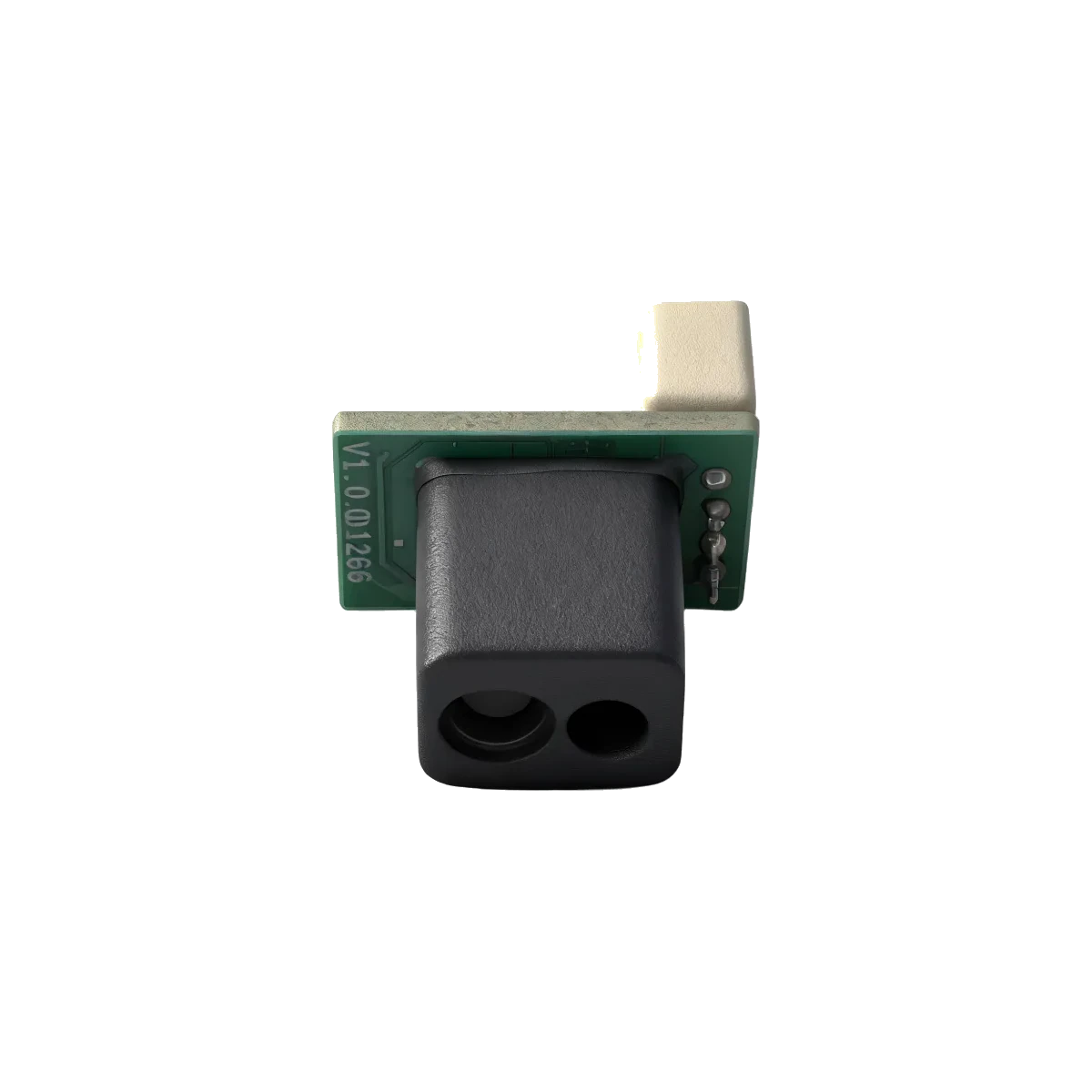
LRF10VB Single-Point 9 m DToF LiDAR Sensor for Camera Focusing, Security Monitoring and Smart Devices
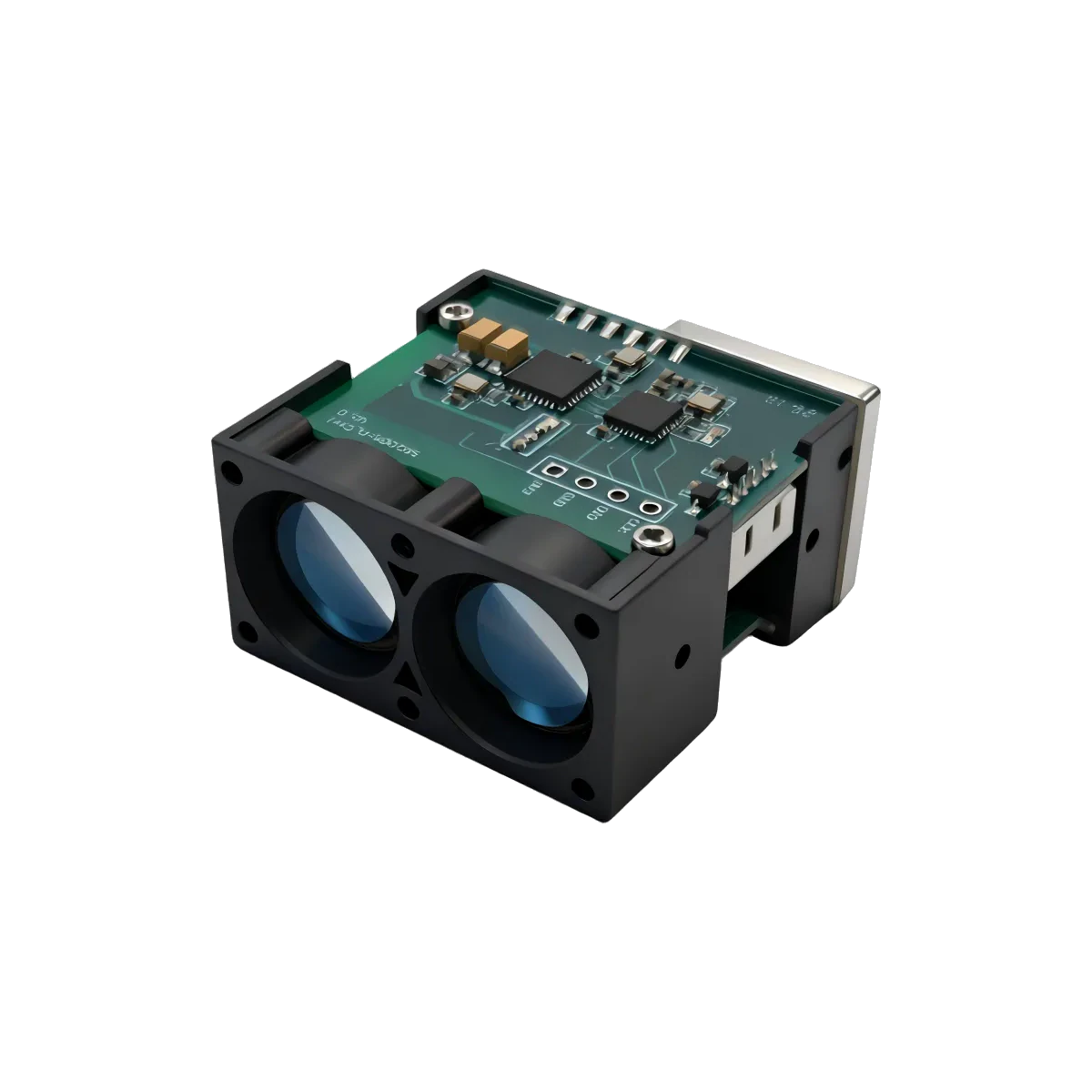
LRF100H 100 m Industrial DToF LiDAR Distance Sensor for Wind Power, Landslide and Level Monitoring
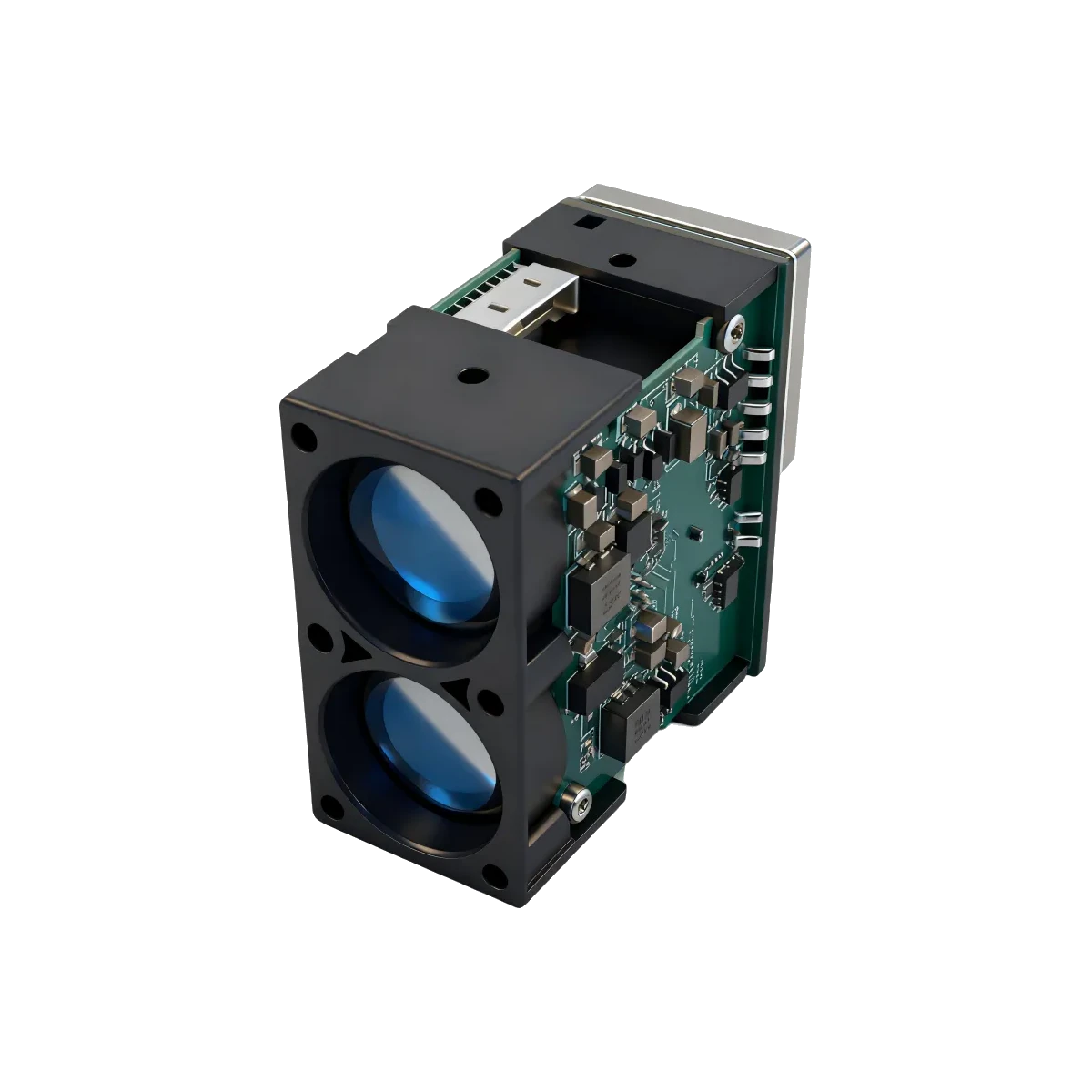
LRF200H 200 m Industrial DToF LiDAR Distance Sensor for Port Cranes, Long Conveyors and Tunnel Safety