Integration
Use the integration path that matches your host:
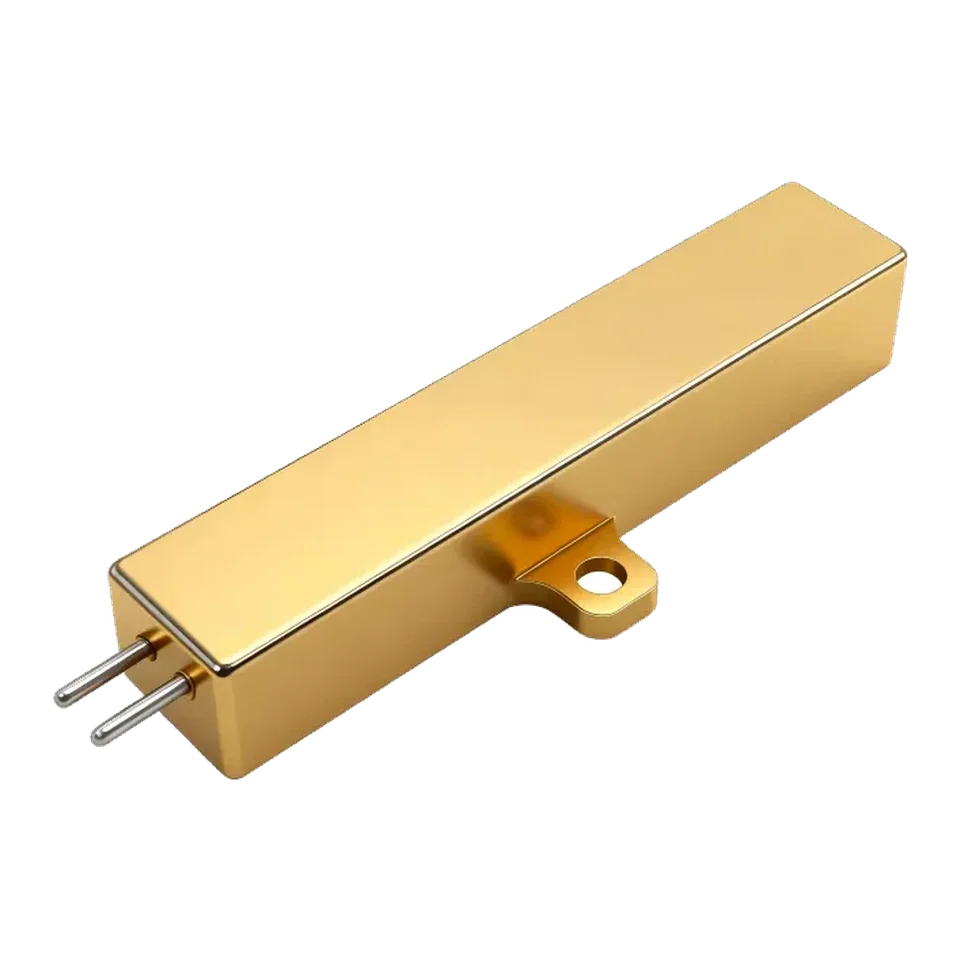
Erbium-glass laser sources
The ERDI ER900 is a 1535 nm pulsed laser source with 18 g weight, from $1,400 per piece with free worldwide shipping. Specs verified:
1535 nm Erbium-Glass Laser Source.
Built into your next design.
1 pc $1,400501+ pcs from $1,050Published unit prices, shipping included · Quantity options
MOQ 1 pc · Free worldwide shipping · Reply within 24 h
Standard warranty: one year
Lead time stated on your PI before payment
Shipped by DHL to customers in the US, India and Ukraine
Published price · shipping included worldwide · pay by card or PayPal, or by bank transfer. Volume price applies automatically.
Added to cart. Go to checkout →
Card or PayPal · Bank transfer · Free worldwide shipping
| Quantity | Unit price | Subtotal at first quantity |
|---|---|---|
| 1–10 | $1,400 | $1,400 |
| 11–30 | $1,300 | $14,300 |
| 31–50 | $1,250 | $38,750 |
| 51–200 | $1,200 | $61,200 |
| 201–500 | $1,100 | $221,100 |
| 501+ | $1,050 | $526,050 |
The details
Read every value with its conditions. View the model documents for integration.
| Parameter | Specification & conditions |
|---|---|
| Model | ER900 |
| Laser Wavelength | 1535nm |
| Parameter | Specification & conditions |
|---|---|
| Laser classification | Class 1 |
| Parameter | Specification & conditions |
|---|---|
| Pulse energy | ≥900 μJ |
| Laser Pulse width | 7 ns |
| Drive pulse width | ≤ 3 ms |
| Pulse repetition rate | 1~5Hz |
| Pulse stability | 10% |
| Raw Beam Diameter | 0.3 mm |
| Beam divergence angle | ≤ 7 mrad |
| Beam Mode | TEM00 |
| Operating temperature | −40 °C ~ +65 °C |
| Storage temperature | −55 °C ~+ 75 °C |
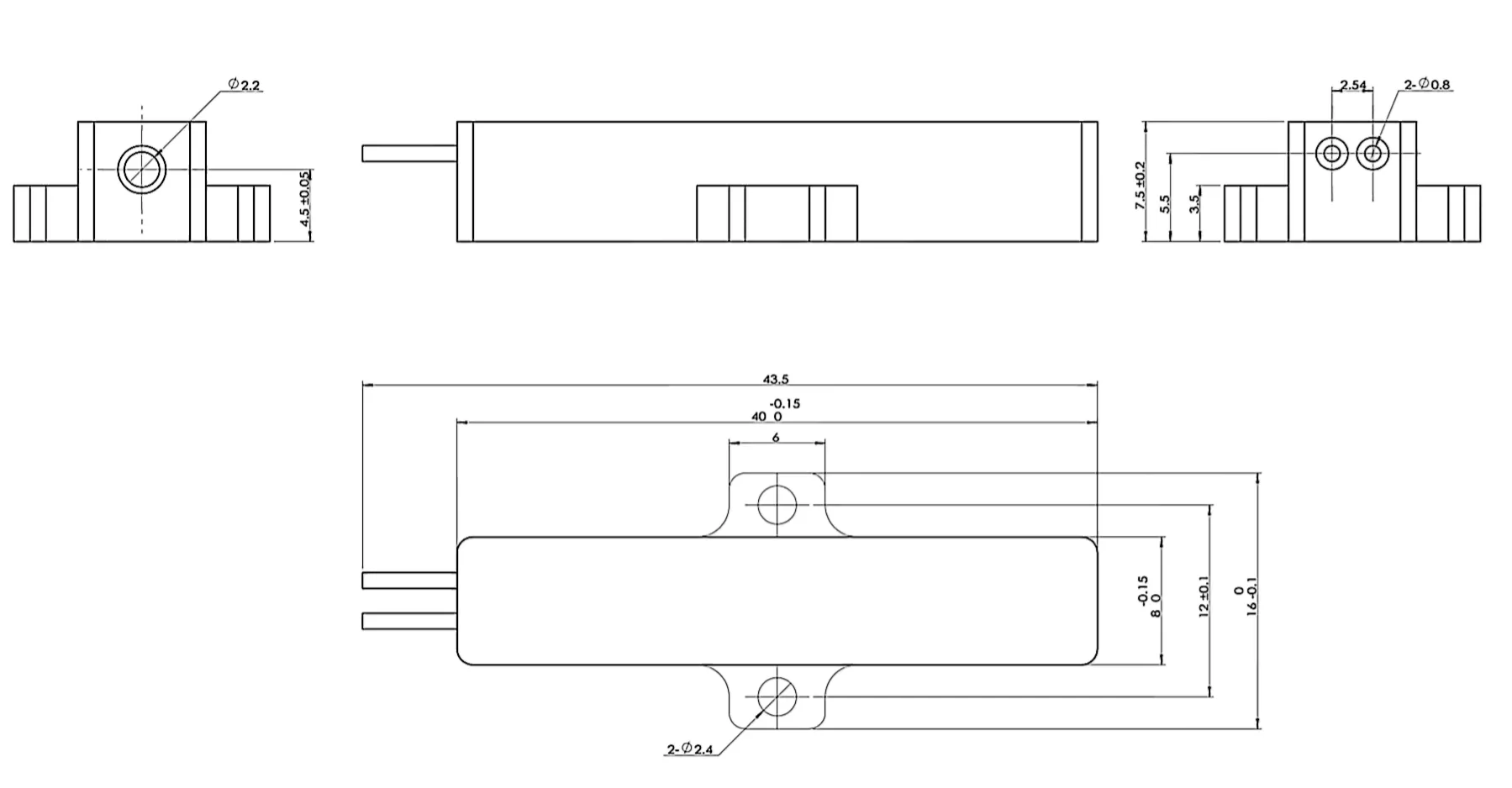
| Dimension (mm) | 40 × 8 × 7.5 mm |
| Weight | 18 g |
| Voltage | 2 V |
| Electric current | 30 A |
| Shock | 1500 G, 0.5 ms |
| Vibration | 20~2000 Hz/20 G |
| Lifetime | >1million shots |
Use the current document revision for design review and confirm the ordered connector and mechanical configuration before release.
ER900 1535 nm Erbium-Glass Laser Source
ER900 is a laser rangefinder module for OEM integration. Confirm target conditions, configuration and the current datasheet before integration.
ER900 provides ≥900 µJ at 1–5 Hz from a 40 × 8 × 7.5 mm, 18 g erbium-glass package, the highest-energy option before stepping to the millijoule modules.
WhatsApp about ER900Published unit prices apply only to the stated quantity band. Configuration, qualification, tax and Incoterm details are confirmed in the quotation.
Integration library
Drawings, test conditions and application notes. Open the part you need.
ER900 is the same size as ER800; choose it when the extra 100 µJ matters more than a 10 Hz update.
If you need still more energy, ER2000 (≥2 mJ, 1–10 Hz) and ER4000 (≥4 mJ, 1–5 Hz) move to a 60 × 25 × 13.5 mm body.
Published unit prices start at $1,050 at 501+ pieces; see Volume Pricing for all quantity bands.
Figures are reproduced from the ER900 datasheet. Read each value together with the test condition printed beside it.
ER900 is part of the 1535 nm erbium-glass pulsed laser family. Its current PDF lists pulse energy ≥900 μJ and optical pulse width 7 ns. Repetition-rate status is shown separately in the table. These are the source's distinct specifications; none establishes the distance or accuracy of a finished instrument.
| Parameter | Current PDF value |
|---|---|
| Model | ER900 |
| Laser Wavelength | 1535nm |
| Laser classification | Class 1 |
| Pulse energy | ≥900 μJ |
| Laser Pulse width | 7 ns |
| Drive pulse width | ≤ 3 ms |
| Pulse repetition rate | 1~5Hz |
| Pulse stability | 10% |
| Raw Beam Diameter | 0.3 mm |
| Beam divergence angle | ≤ 7 mrad |
| Beam Mode | TEM00 |
| Operating temperature | -40 ℃ ~ +65 ℃ |
| Storage temperature | -55 ℃ ~+ 75℃ |
| Dimension (mm) | 40×8×7.5 mm |
| Weight | 18 g |
| Voltage | 2 V |
| Electric current | 30 A |
| Shock | 1500 G, 0.5 ms |
| Vibration | 20~2000 Hz/20 G |
| Lifetime | >1million shots |
Storage temperature: the current PDF table gives −55 to +75°C; its introduction gives −55 to +85°C. The table is displayed, but this individual limit is pending confirmation for the ordered version.
The recorded raw beam diameter is 0.3 mm and divergence is ≤ 7 mrad. The current specification table does not state the divergence's full-angle/half-angle convention or the beam-width measurement method. Those definitions remain unspecified until a beam report confirms them. The beam-mode entry does not, by itself, supply a measured M² value.
Values above were checked against the current model PDF, including its inequality signs and stated measurement qualifiers. Source entries of “Class 1” require the corresponding classification report; shock, vibration and lifetime entries likewise need their stated test conditions. Missing tolerances and statistics are not reconstructed from another model or a paper.
The datasheet specifies 1–5 Hz for this energy level. Use ER800 if you need up to 10 Hz.
Yes—the model PDF describes board-level integration. Confirm the ordered ER900 version’s mounting method, terminal arrangement and driver connections against its mechanical drawing and factory test report; the package outline alone does not define a PCB footprint.
ER2000 and ER4000, which are larger modules with their own supply input.
Taken from the ER900 outline drawing and user manual. Check hole positions against the drawing or the STEP file before machining a bracket.
Two Φ2.4 mm mounting holes in the side lugs, 12 mm apart centre to centre. Recommended fastening torque 0.2 N·m. Screw size is not stated on the drawing.
Request the ER900 STEP model for your bracket design.
Engineering Q&A
Wiring, protocol or integration question? Ask in the ERDI engineering community.
Use the integration path that matches your host:
Laser class as stated in the module document. Classification of your finished product depends on its optical path and configuration.
Inspect the model in your browser, or ask for the STEP file for your design review.
Request 3D STEP model — reply within 24 hTechnical inquiry
Share the target, range, interface and expected quantity. Your selected model stays attached to the inquiry.