
Application evaluation
Field measurement
3,000 m against a building face, from 12 grams.
At 3,000 m the spot is about 30 m across. Plan for that.
The headline on a long-range module is always the easy half of the specification. LRF3000A1’s is ≥ 3,000 m — and the condition attached to it is a 70%-reflectivity building target in clear air with visibility ≥ 4 km. Its minimum is 1 m, against a 90% white board. Both halves are the specification.
For a field or survey instrument, three consequences of that follow, and none of them is a flaw — they are what 3,000 m out of a 12-gram package costs.
The spot grows. Typical beam divergence is ≤ 10 mrad with a receiver field of view around 8 mrad. Ten milliradians at 3,000 m is an illuminated footprint roughly 30 m across. That is fine against a building face or a hillside and useless against a thin mast, a pole or a single tree at that distance — the return you get is the scene inside the spot, not the object you were aiming at. Below about 1,500 m the footprint halves and the problem largely goes away.
The error grows with distance, by formula. Accuracy is ±0.7 m at d ≤ 100 m and ±(0.7 + 0.003·d) m above it. Evaluated at the rated maximum that is roughly ±9.7 m — not a hidden defect but an honest description of a return signal that weakens with the square of distance. Compute the formula at your own longest working distance and decide whether that budget fits the workflow before you size anything else. Valid measurement rate is ≥ 98%, false-alarm rate ≤ 1%.
The rate drops. 3–10 Hz adaptive in normal mode, 1–10 Hz in long-range mode, with response time ≤ 160 ms plus a 100–517 ms start-up and first-ranging window. This is a module for a deliberate measurement, not a tracking loop.
What you get in return is the envelope. 13.5 × 25.1 × 27.8 mm, 12 ± 0.5 g, IP67, 3.3–5 V DC with ripple below 0.1 V, ≤ 1.8 W at 25 °C (≤ 2.1 W at 70 °C, ≤ 1.6 W at −20 °C), standby ≤ 1 mW with enable high, operating −20 to +60 °C, storage −25 to +75 °C, shock 1000 g/ms and vibration 5–50–5 Hz at 2.5 g, MTBF ≥ 1,500 h. Average laser power is 7.63 mW at 905 ± 10 nm.
On the host side, LRF3000A1 is not a longer H-series part and it does not share their protocol. It uses an 8-byte command frame family, 115200 bps by default (9600 bps selectable), returns the result as the real value multiplied by ten, and carries a status byte where 1 means the reading succeeded. Budget a separate parser.
One honest note on the safety field: LRF3000A1’s catalog laser-safety row is empty. The Class 1 (IEC 60825-1) designation for this model appears in its wavelength row instead, and like every other model here it is a manufacturer declaration from the manual, with no third-party classification report behind it.
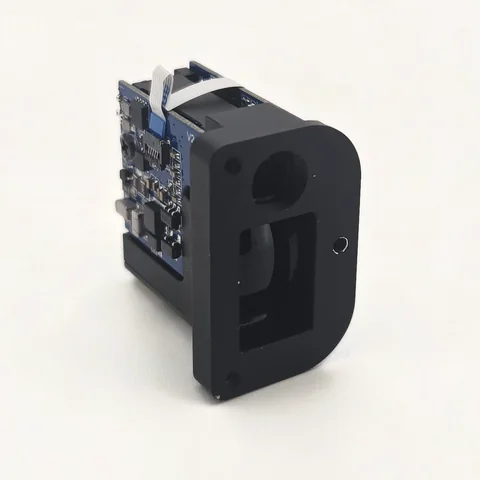
±0.7 m at 100 m becomes ±9.7 m at 3,000 m — by the formula.
Bring the measurement conditions and integration constraints into the same review.
01Reach or near field — you may need both+
LRF3000A1 starts at 1 m. The H-series starts at 0.05 m. A field instrument that has to read both a distant slope and a nearby staff or tripod needs two sensors, not one.
02The alternative at 1,500 m+
LRF1500H reads 0.05–1,500 m at 90% reflectivity and 0.05–300 m at 10%, in a 33 × 34 × 18 mm / 20 ± 2 g body on 9–36 V, at up to 1 kHz. It is heavier and needs an industrial rail, but it is two orders of magnitude faster and its minimum range is 5 cm. Where the workflow is closer than 1,500 m, it is usually the better instrument.
03Repeatability is the survey number+
The H-series quotes the same ±10 cm / 1% accuracy at every reach, so the figure that separates them is repeatability at the long end: ±10 cm on LRF300H, ±50 cm on LRF600H, ±100 cm on LRF1500H. If your workflow averages readings, that is the column to design against.
From the module to the host.
LRF A series · UART, TTL 3.3 V
115200 bps by default, 8-byte frames, results scaled ×10.
Check the supply, signal levels, pinout and output format for the exact model and revision. Request any missing detail before connecting your hardware.
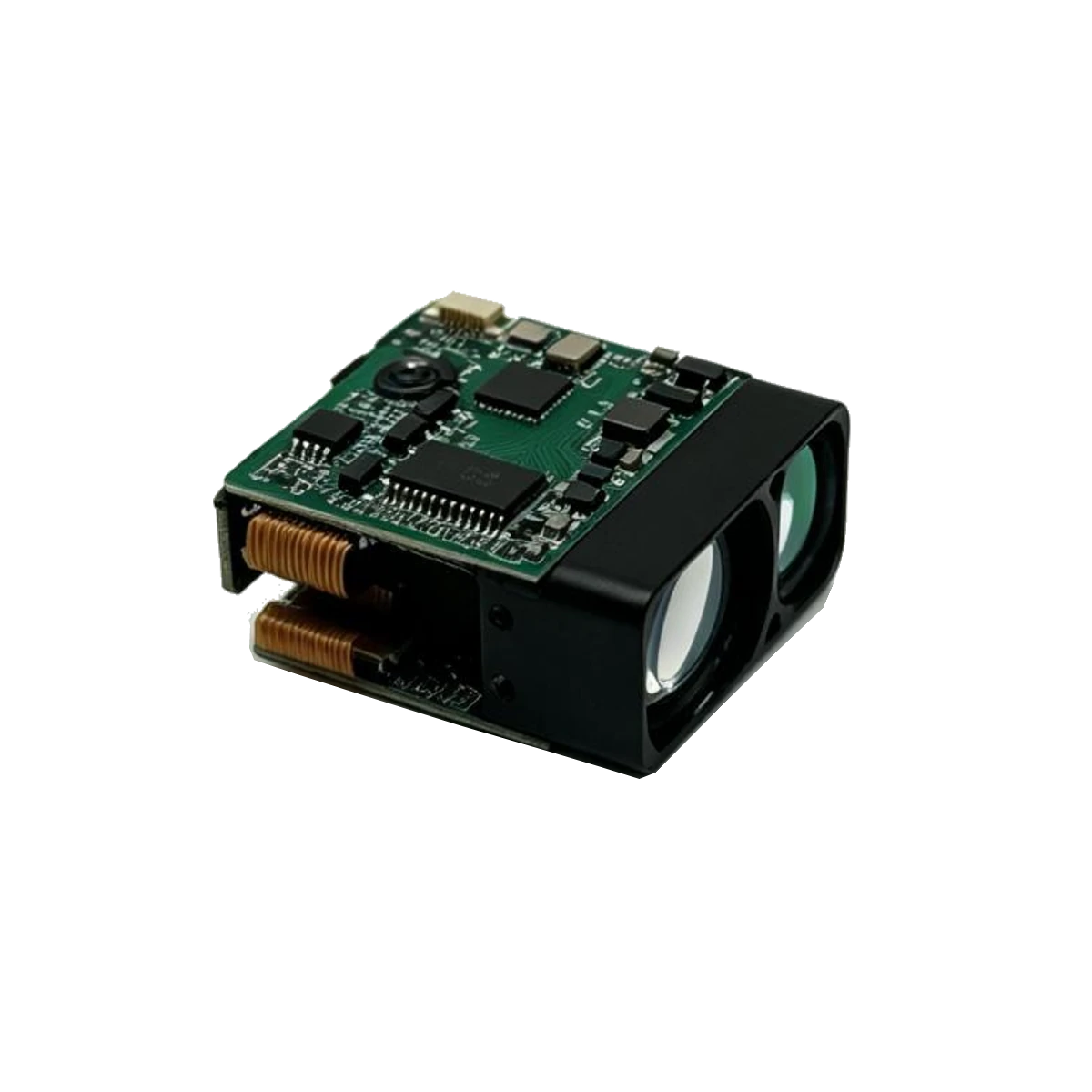 LRF3000A1
Related application pages
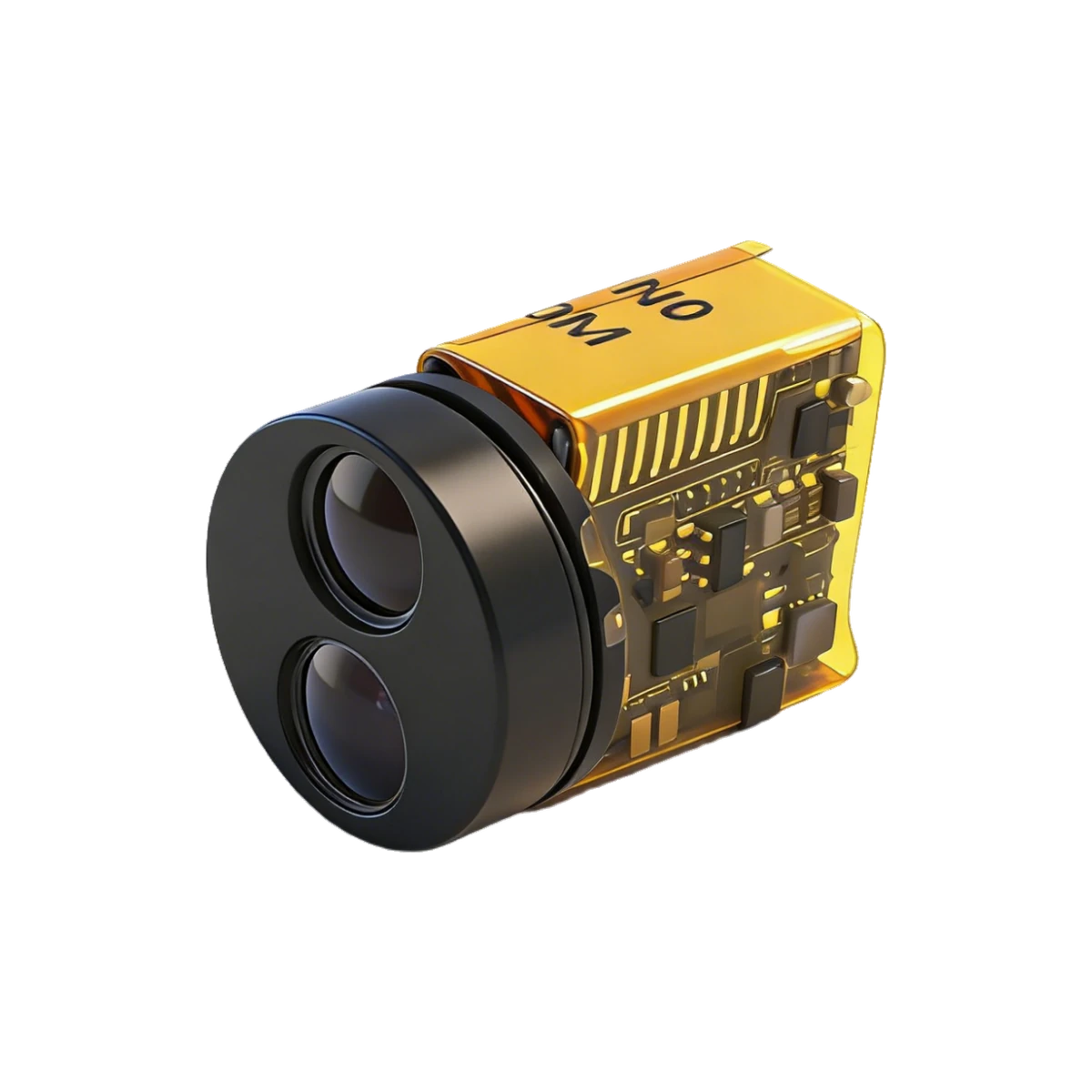
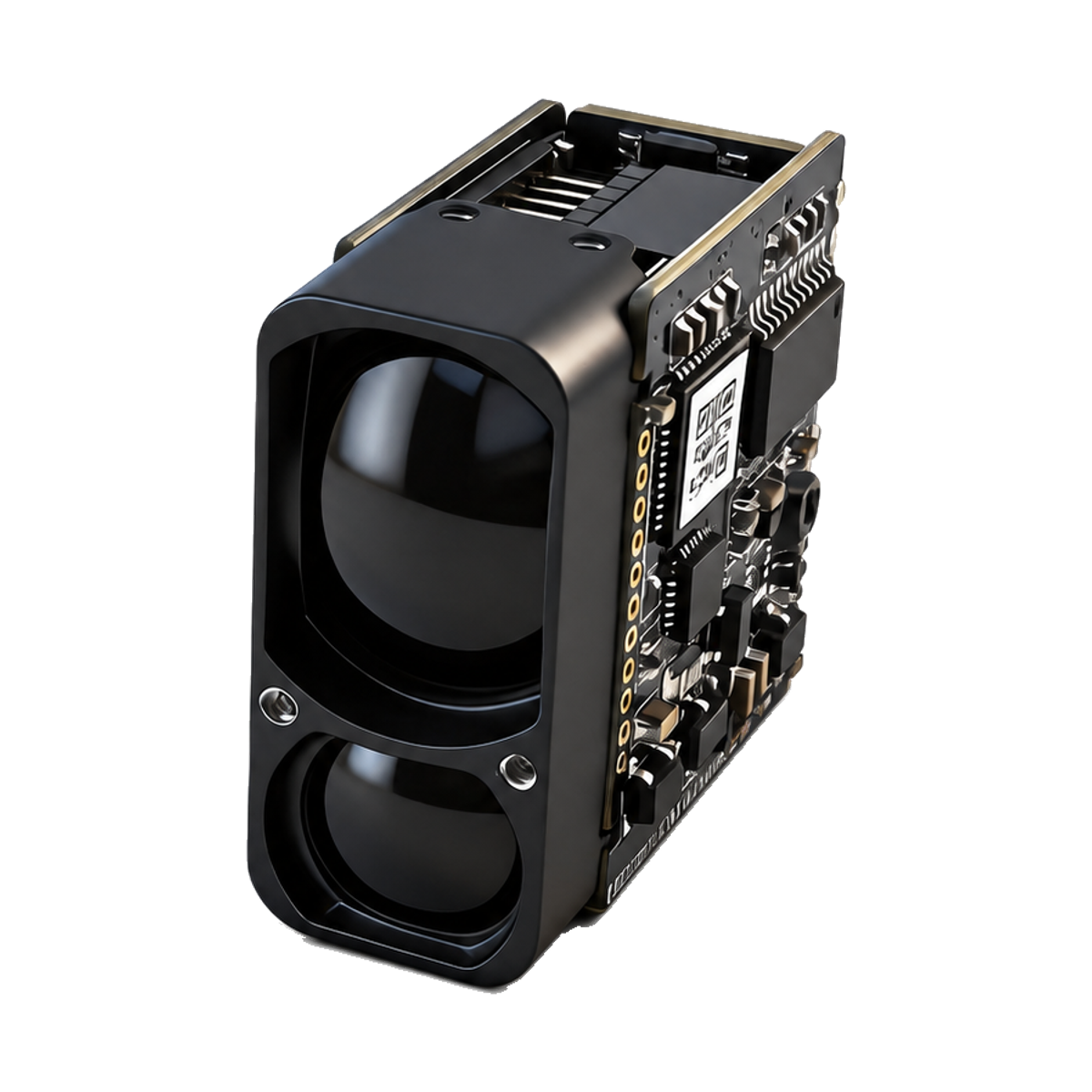
Share the model and distance for a technical review.
Share the distance, object surface, interface, space constraints and quantity. Include a model number if you already have one in mind.
The full 300 m to 3,000 m comparison table · Inside the LRF3000A1: where the weight budget goes · Understanding rangefinder accuracy specs
Confirm the current datasheet and laser safety documentation for the specific model and revision. Final suitability depends on your complete device and its operating conditions.