Field notes from the people who build the modules: how 905 nm direct time-of-flight ranging actually works, how to read our datasheets, and how to design our modules into your platform.
Download the 905 nm Technical Guide (PDF) ↗
-
Laser Rangefinder Module I2C: What Actually Works
Seven ERDILRF 905 nm modules expose I2C alongside UART. See which ones, the VB-series 0x52 default address, and where UART is still the better choice.
-
Laser Rangefinder Module 100 m: Spec vs Real Range
A 100 m module reaches 100 m only at 90% reflectivity. Compare ERDILRF LRF50H, LRF100H, LRF200H and LRF300H to see which hits 100 m on dark surfaces.
-
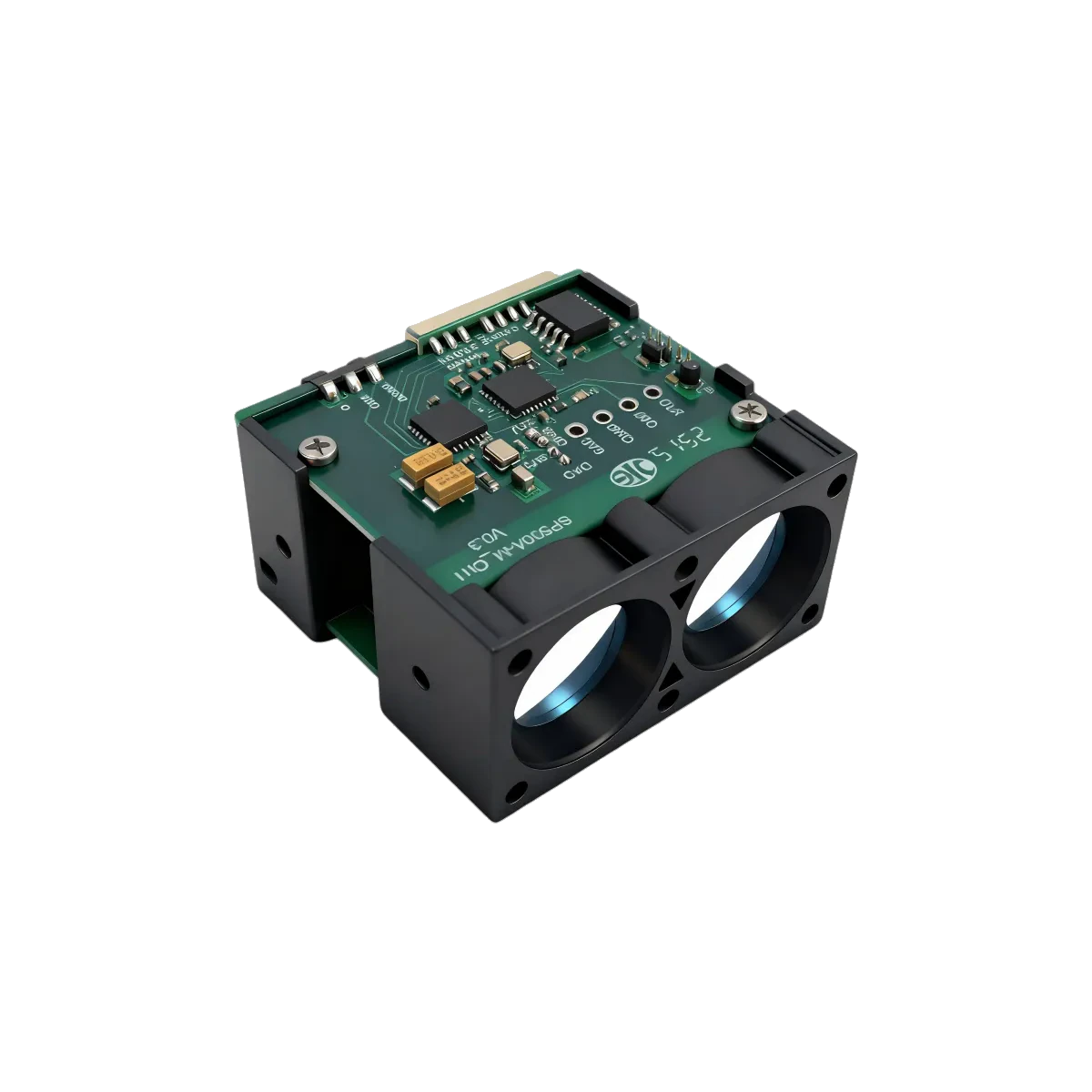
905 nm High Repetition Rate Laser Ranging Modules: Engineering Guide for OEM Integration
How 905 nm high repetition rate DToF modules really behave: ToF equations, rate trade-offs, verified 20-1500 m ERDILRF families, and an acceptance test plan.
-
Read a Laser Distance Module With Arduino Over UART
Review exact-model UART byte handling, units and invalid results before using Arduino drivers. Confirm electrical levels, serial settings and enable configuration before connecting hardware.
-
Laser Rangefinder Module 1000 m: LR-Series Compared
LR1000E2 to LR2000E2 compared: range, accuracy formulas, beam divergence and power draw, plus where the datasheet accuracy bands actually stop.
-
Rangefinder Update Rate for Moving Platforms
How to pick an ERDILRF laser rangefinder update rate, from a few Hz to kHz, for AGVs, drones and gimbals, based on platform speed and the error you accept.
-
Laser Rangefinder Serial Protocol: Frames & Checksums
ERDILRF’s two wire protocols explained: 55 AA and 5C frame formats, the checksum bug that breaks most integrations, and a working Python decoder.
-
Choosing Rangefinder Range & Accuracy for Gimbal Payloads
How target reflectivity, ambient light and update rate change real-world rangefinder range and accuracy for gimbal and EO payload integration.
-
What IEC 60825-1 Class 1 means for a 905 nm module
What IEC 60825-1 Class 1 really certifies for a 905 nm laser module, why it is a design outcome rather than a property of the wavelength, and what it costs.
-
Connect a UART Laser Rangefinder to Pixhawk/ArduPilot
Evaluate a model-specific UART integration with ArduPilot: verify firmware support, frame length, electrical limits, documented conflicts and bench acceptance before configuration.
-
Laser Distance Sensor Checklist: Level & AGV Sensing
A practical integration checklist for laser distance sensors in industrial level measurement and AGV or AMR collision avoidance, from range to mounting.
-
Laser Rangefinder vs LiDAR vs Ultrasonic for Altitude Hold
Ultrasonic tops out near 7 m. Compare 905 nm laser rangefinders against LiDAR and ultrasonic for drone altitude hold and terrain following, point by point.
-
Using a 905 nm Laser Rangefinder Module for AGV/AMR Obstacle Avoidance: Where It Beats (and Where It Complements) LiDAR
Single-point 905 nm rangefinder modules vs 2D/3D LiDAR for AGV/AMR obstacle avoidance: cost, update rate, range and reflectivity, plus model picks.
-
905 nm vs 1535 nm Laser Rangefinder Modules: How to Choose for UAV Gimbals and Payloads
905 nm and 1535 nm laser rangefinder modules solve different gimbal problems. Compare range, weight, cost and eye safety by UAV mission, with model picks.
-
How to Prepare an OEM/ODM RFQ for Laser Rangefinder Modules
Prepare an OEM/ODM RFQ with application requirements, exact-model documentation, evaluation criteria and written confirmation of open terms.
-
Introducing Our Short-Range DToF Sensor Line
Eight new 905 nm DToF sensors covering 0.05 m to 1,500 m — from a 1.5 g chip-scale sensor for drone altitude hold to a 20 g industrial LiDAR for kilometre-class crane and traffic-safety ranging. Here’s how the line is organized and where each format fits.
-
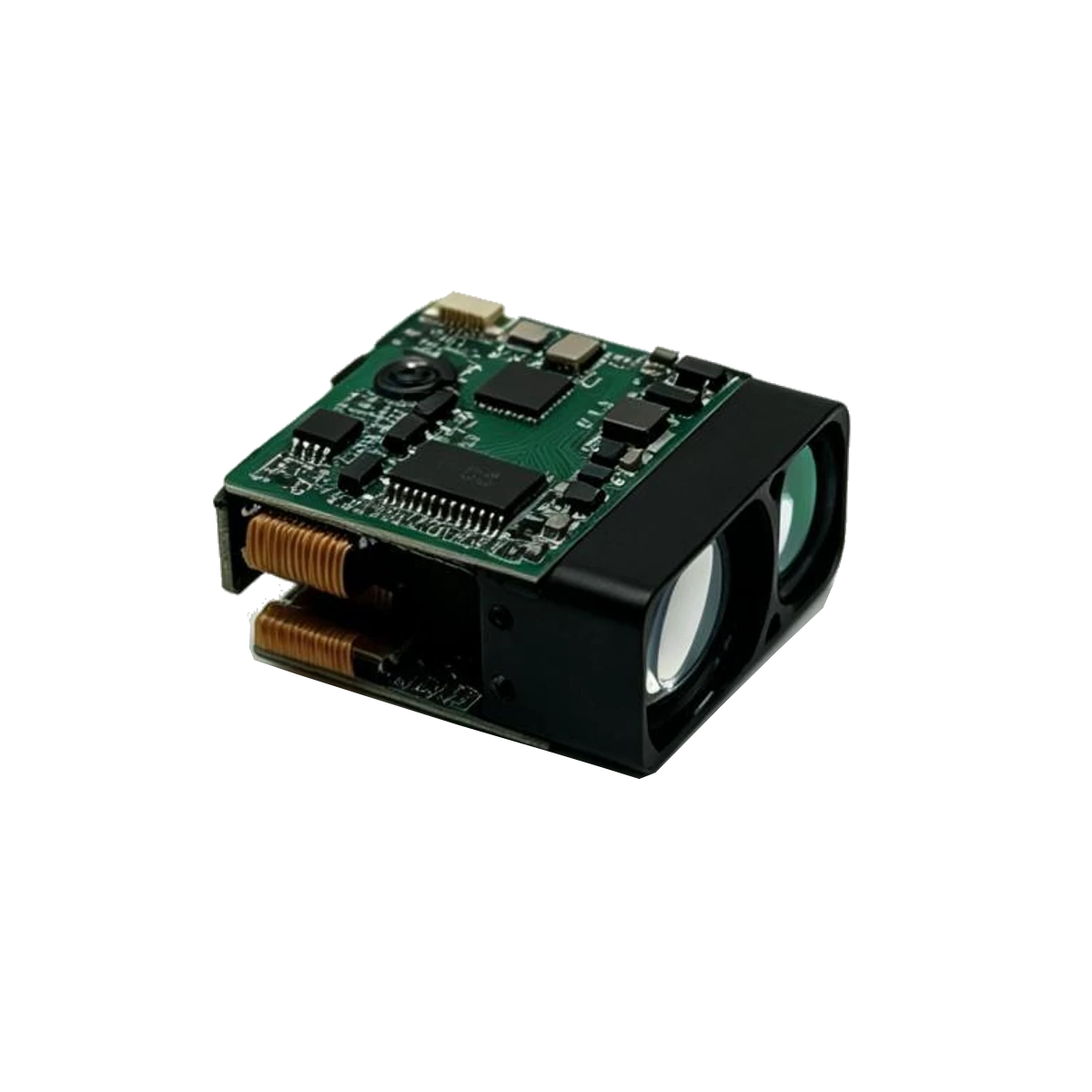
Inside the LRF3000A1: 3,000 Meters from 12 Grams
Our flagship module reaches past 3,000 m from a 13.5 × 25.1 × 27.8 mm, 12-gram body. Here’s the engineering behind that number, spec by spec, and what it honestly means at the edge of its range.
-
Short-Range Single-Point DToF Sensors for Industrial & Robotics
How to evaluate single-point DToF sensors for industrial and robotics tasks: minimum range, surface conditions, UART configuration and a practical sample test.
-
Drone Altimetry & Obstacle Sensing with Laser Modules
Compare drone ranging requirements, documented module mass, timing and supply limits, and the evidence to confirm before integration.
-
Laser Rangefinders in Night Vision & Thermal Devices
Why a ranging module has to disappear into a night-vision or thermal housing rather than compete with it for weight and space — and how the SPD-mini and tube-series lines are built around exactly that constraint.