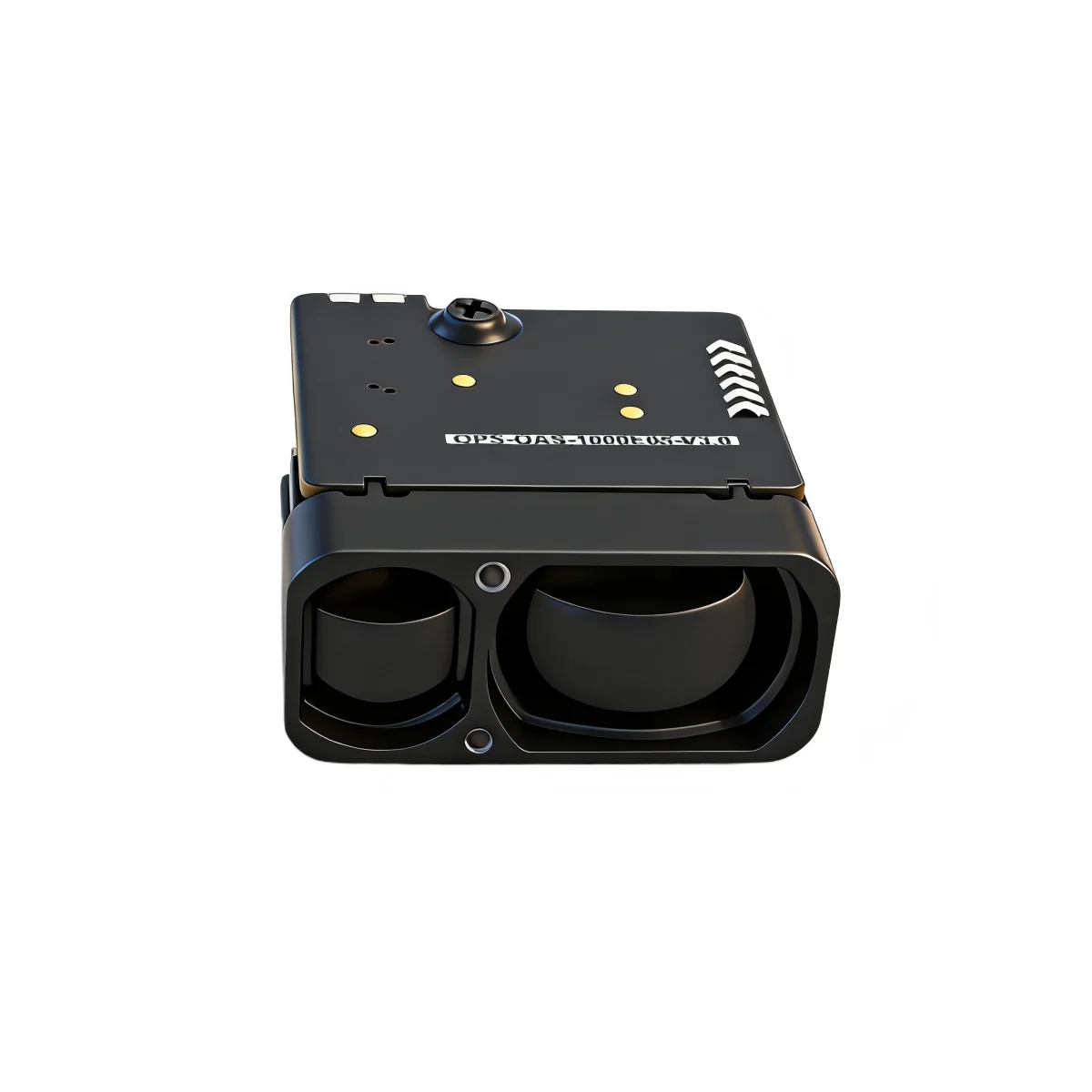
IP67 and IP65 are often treated as a ranking. They are not. The first digit describes dust and contact protection; the second describes water. IP67 means dust-tight plus temporary immersion under a defined test. IP65 means dust-tight plus water jets from a defined direction. A product can pass one and fail the other. The rating also stops at the boundary of what was tested.
What the two digits actually say
Under IEC 60529, the first digit ranges from 0 to 6 for solid-particle protection. A 6 means dust-tight: no dust ingress under the test conditions. The second digit ranges from 0 to 8 for water. A 5 means protection against water jets from a nozzle; a 7 means protection against temporary immersion. The tests are separate. An IP67 enclosure is not automatically an IP65 enclosure, and an IP65 enclosure is not automatically suitable for immersion.
| Rating | Dust / contact | Water test | What it does not prove |
|---|---|---|---|
| IP65 | Dust-tight | Water jets from a nozzle | Immersion, pressure cycling, steam, or a permanent seal |
| IP66 | Dust-tight | Powerful water jets | Immersion |
| IP67 | Dust-tight | Temporary immersion under stated conditions | Continuous immersion, deep water, or repeated pressure cycling |
| IP68 | Dust-tight | Continuous immersion by agreement between buyer and supplier | A universal depth rating; the conditions are product-specific |
The immersion test is not a pressure-vessel test. It is a defined exposure, usually a shallow tank for a limited time. A housing that passes it can still leak after thermal cycling, after a cable is pulled, or after the window seal takes a hit. The rating is a starting condition, not a lifetime guarantee.
Where the rating stops on a laser rangefinder
Laser rangefinder modules are not finished instruments. The optical window, the PCB, the connector and the host enclosure each have their own sealing problem. ERDI’s model records make that boundary explicit. The LR1000E2 and LR1200E2 records state IP67 for the lens cavity only, not for the exposed board or the complete host product. The LRF3000A1 record states an IP67 module rating in its manual, while noting that the host enclosure still needs its own assessment. The SPD1200N2 record states IP67 inside the lens chamber.
That wording is deliberate. A lens cavity can be sealed while the connector pins, the PCB surface and the cable exit are not. If the module is mounted inside a customer enclosure, the module’s rating does not transfer to the enclosure. If the module is exposed, the lens cavity rating does not cover the rest of the assembly.
IP65 and IP67 in the same product family
A product family can contain both ratings without contradiction. A sealed lens block may be IP67, while the complete module with a connector is IP65, and the finished instrument may be IP54. The number that matters is the one for the configuration you will ship. Ask for the rating of the exact assembly, not the rating of the best sub-component.
A sealing checklist for the host
- Define the exposed surfaces. Mark the lens window, the connector, the cable gland, the housing joint and any button or vent.
- Choose the water test that matches the use: jets for washdown, temporary immersion for a wet deck, continuous immersion only with a product-specific agreement.
- Check the window material and its bond. A coated window can delaminate; an adhesive can creep under heat.
- Check pressure equalization. A sealed housing that heats and cools can pull water past a marginal seal. A breather membrane may be needed, and it has its own rating.
- Run thermal cycling before the water test. A seal that passes at 20°C can fail after a cold soak and a hot soak.
- Inspect after the test, not only during it. Open the housing and look for droplets, condensation and corrosion at the connector.
For the standard definitions and test conditions, see IEC 60529. For the ERDI records that state the rating boundary, see the LR1000E2, LR1200E2, LRF3000A1 and SPD1200N2 pages. The protective window acceptance checklist covers the optical side of the same problem.
Send the mounting arrangement, cleaning method and water exposure to https://erdilrf.com/contact/. We will confirm what the module record covers and what the host still has to prove.