Field notes from the people who build the modules: how 905 nm direct time-of-flight ranging actually works, how to read our datasheets, and how to design our modules into your platform.
Download the 905 nm Technical Guide (PDF) ↗
-
Laser Rangefinder Module Pinout & Wire Colors
Pin-by-pin wiring for 905 nm rangefinder modules: 5-pin vs 6-pin, wire colours, connector part numbers, and which logic levels are unpublished.
-
Rangefinder Module Datasheet: What to Check (2026)
Six datasheet fields decide whether a 905 nm rangefinder module fits: minimum range, accuracy per band, update rate, interface, size, sealing.
-
Long-Range Rangefinder Module 300-3000 m (2026)
How the 300 m, 600 m, 1500 m and 3000 m 905 nm modules compare: reflectivity-derated range, repeatability, serial frame width and supply rail.
-
Laser Rangefinder Module I2C: What Actually Works
Seven ERDILRF 905 nm modules expose I2C alongside UART. See which ones, the VB-series 0x52 default address, and where UART is still the better choice.
-
100 m Rangefinder Module: Spec vs Real Range 2026
A 100 m module reaches 100 m only at 90% reflectivity. Compare ERDILRF LRF50H, LRF100H, LRF200H and LRF300H to see which hits 100 m on dark surfaces.
-
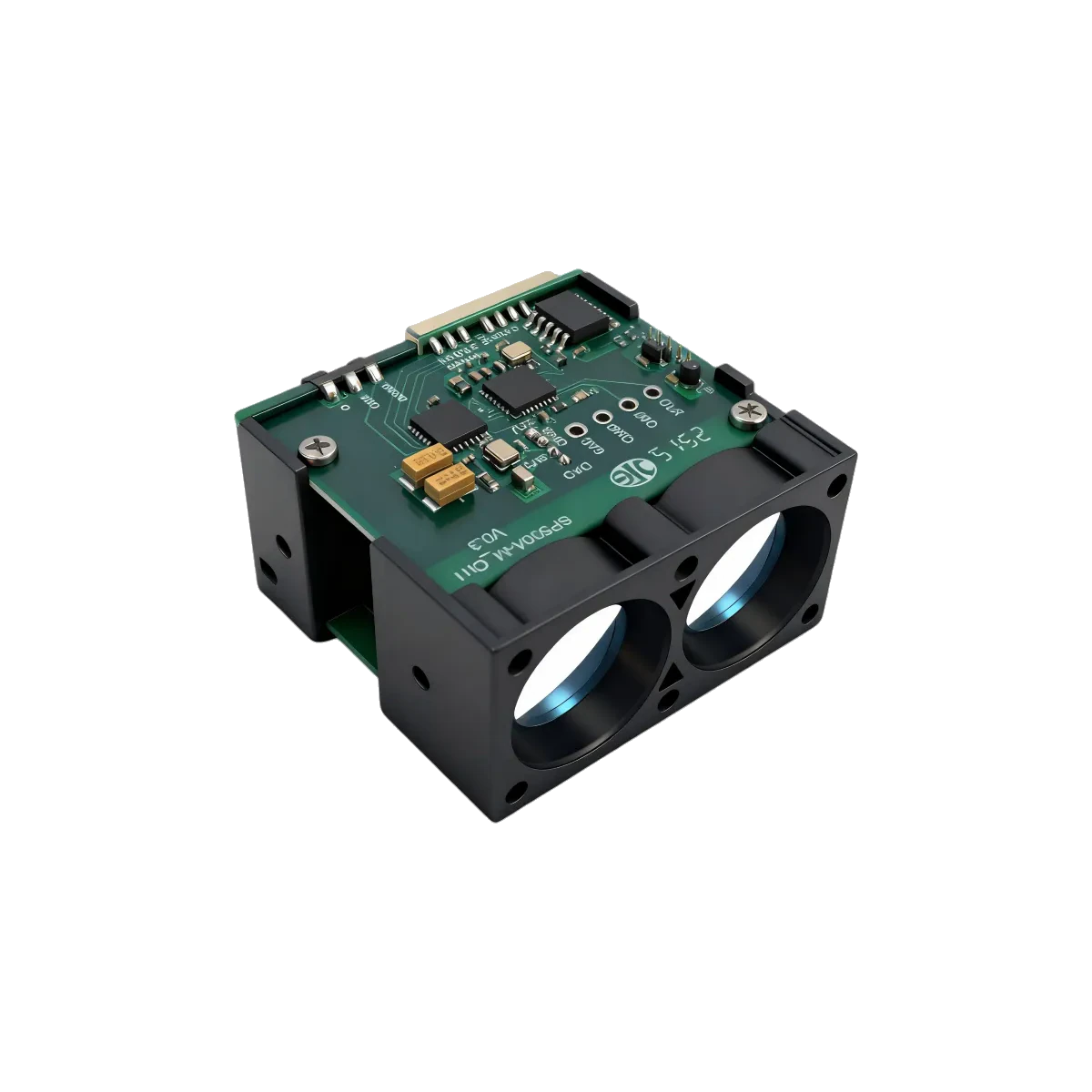
905 nm High-Rate Laser Ranging Modules: 2026 Guide
How 905 nm high repetition rate DToF modules really behave: ToF equations, rate trade-offs, verified 20-1500 m ERDILRF families, and an acceptance test plan.
-
Laser Distance Sensor + Arduino UART Guide (2026)
Wire a UART laser distance module to an Arduino: voltage levels, baud rate, frame parsing, invalid readings, and a tested sketch you can copy.
-
1000 m Rangefinder Modules: LR-Series (2026)
LR1000E2 to LR2000E2 compared: range, accuracy formulas, beam divergence and power draw, plus where the datasheet accuracy bands actually stop.
-
Rangefinder Update Rate for Moving Platforms
How to pick an ERDILRF laser rangefinder update rate, from a few Hz to kHz, for AGVs, drones and gimbals, based on platform speed and the error you accept.
-
Laser Rangefinder Serial Protocol: Frames & Checksums
Model-specific laser rangefinder serial protocols: LR2000E2 ranging, LRF200H output and settings, and LRF0610C format differences. Check units and checksums.
-
Gimbal Payload Rangefinder Selection Guide (2026)
How target reflectivity, ambient light and update rate change real-world rangefinder range and accuracy for gimbal and EO payload integration.
-
Is a 905 nm Class 1 Laser Eye-Safe? IEC 60825-1 Explained
What IEC 60825-1 Class 1 certifies for a 905 nm rangefinder module, why 1535 nm is treated differently, and what changes if you alter the window or optics.
-
Pixhawk / ArduPilot Rangefinder UART Setup (2026)
Evaluate a model-specific UART integration with ArduPilot: verify firmware support, frame length, electrical limits, documented conflicts and bench acceptance before configuration.
-
Laser Distance Sensor Checklist 2026: Level & AGV
A practical integration checklist for laser distance sensors in industrial level measurement and AGV or AMR collision avoidance, from range to mounting.
-
Rangefinder vs LiDAR vs Ultrasonic: 2026 Guide
Ultrasonic tops out near 7 m; a 905 nm laser rangefinder reads 50 to 600 m at 1 kHz. Side-by-side numbers for drone altitude hold, with wiring notes.
-
905 nm Rangefinder vs LiDAR for AGV/AMR (2026)
Single-point 905 nm rangefinder modules vs 2D/3D LiDAR for AGV/AMR obstacle avoidance: cost, update rate, range and reflectivity, plus model picks.
-
905 nm vs 1535 nm for UAV Gimbals: 2026 Guide
905 nm and 1535 nm laser rangefinder modules solve different gimbal problems. Compare range, weight, cost and eye safety by UAV mission, with model picks.
-
Laser Rangefinder OEM/ODM RFQ Guide (2026)
Prepare an OEM/ODM RFQ with application requirements, exact-model documentation, evaluation criteria and written confirmation of open terms.
-
Introducing Our Short-Range DToF Sensor Line
Compare ERDI DToF sensor power, interfaces and distance units using LRF22VB and LRF50H specification examples and model-specific integration requirements.
-
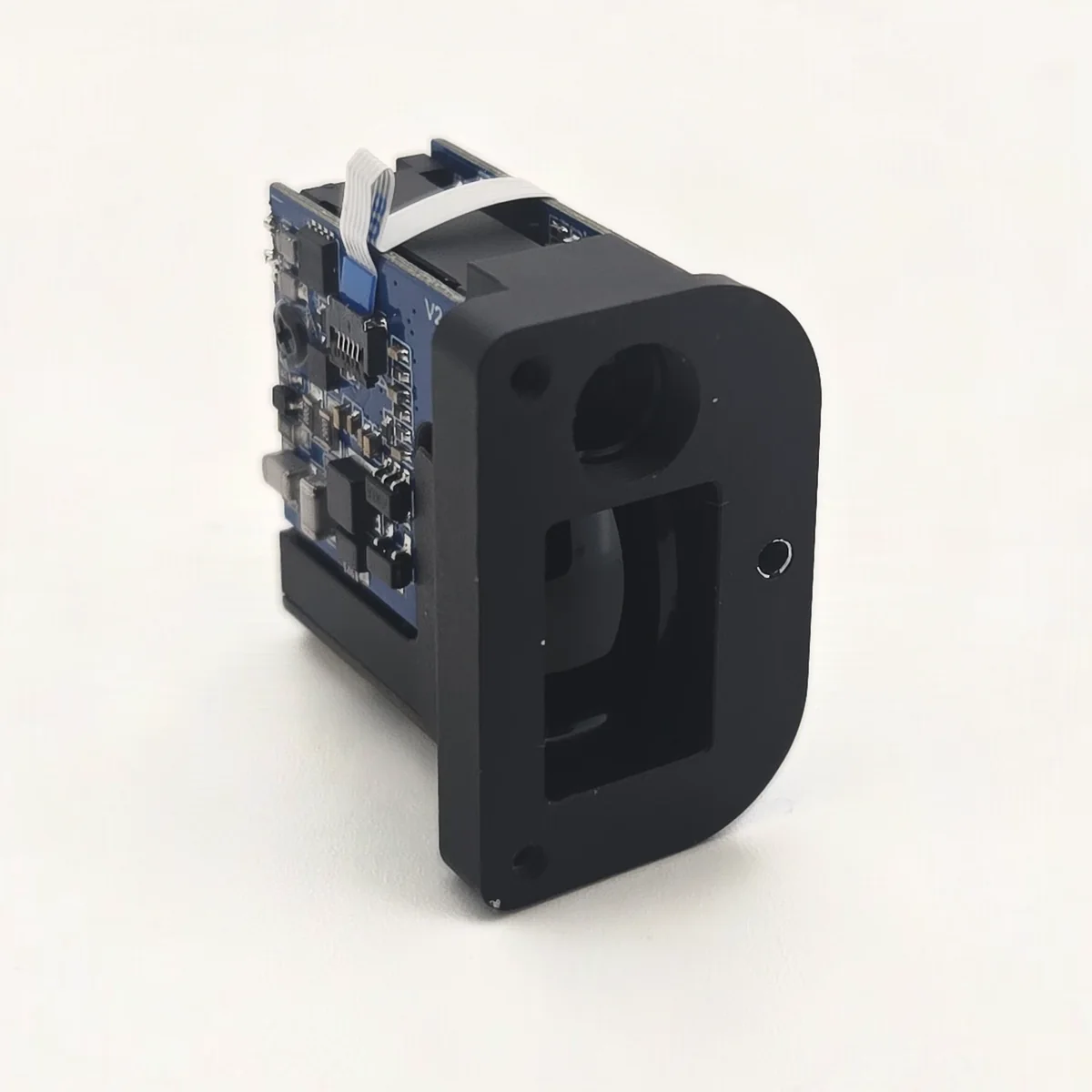
Inside the LRF3000A1: 3,000 Meters from 12 Grams
Our flagship module reaches past 3,000 m from a 13.5 × 25.1 × 27.8 mm, 12-gram body. Here’s the engineering behind that number, spec by spec, and what it honestly means at the edge of its range.